
Democratising High-Level Coaching with a Digital Companion App
À propos de ce projet
The founder brought a defined coaching methodology and a clear product vision for Orizion, and partnered with Imaginary Cloud to execute it at production quality on a tight timeline.
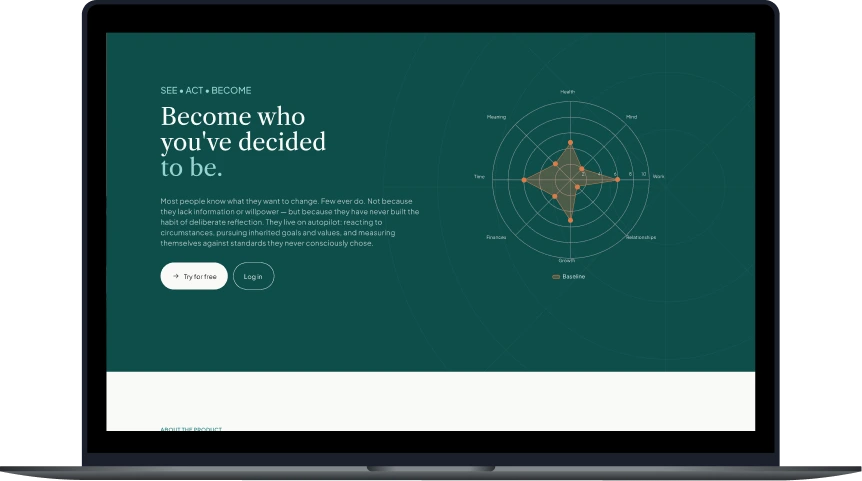
Result: Imaginary Cloud successfully delivered a fully functional MVP web application, complete with a new brand identity and design system. The app digitises an advanced coaching methodology, allowing him to scale his business and create new B2B and B2C revenue streams.
notre IMPLICATION
UX/UI Design
Software Development
Product Development
technologies
React
Typescript
Vite
FastAPI
Python
PostgreSQL DB
Auth0
Azure
GitHub
Stripe
Figma
Figma MCP Server
Gemini
Cursor
What began as an effort to digitize a traditional executive coaching journal quickly evolved into building a "digital companion for life".
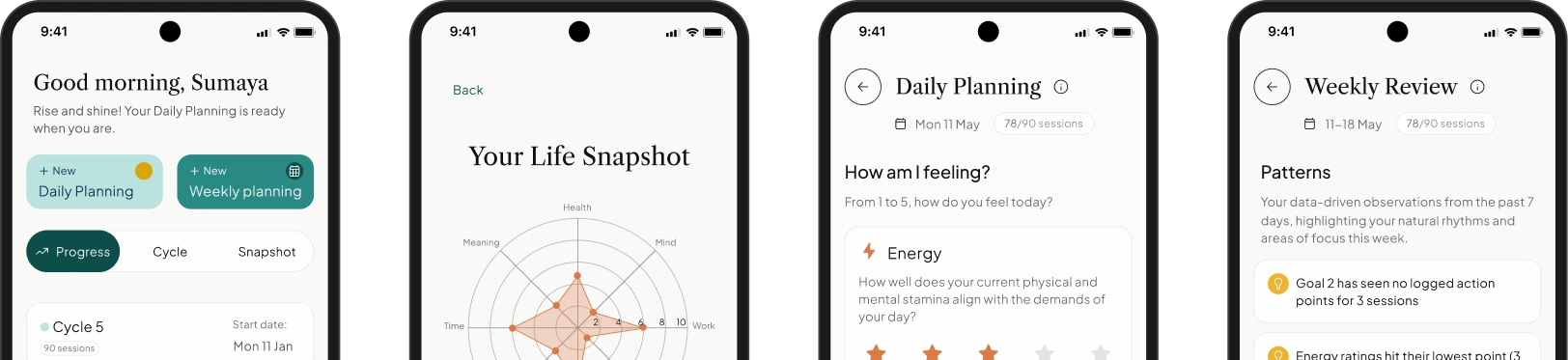
Moving far beyond a simple digital replica, the platform was re-imagined to democratise high-level Executive Coaching, offering users structured guidance without the high costs of traditional sessions. The app functions as a habit-tracking tool that guides users to set goals and reflect on them through daily, weekly, monthly, and cyclic reviews.
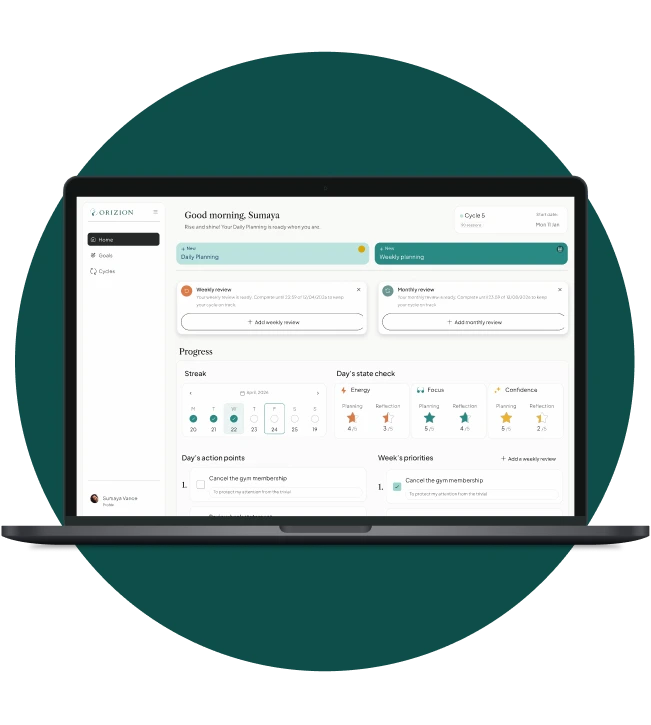
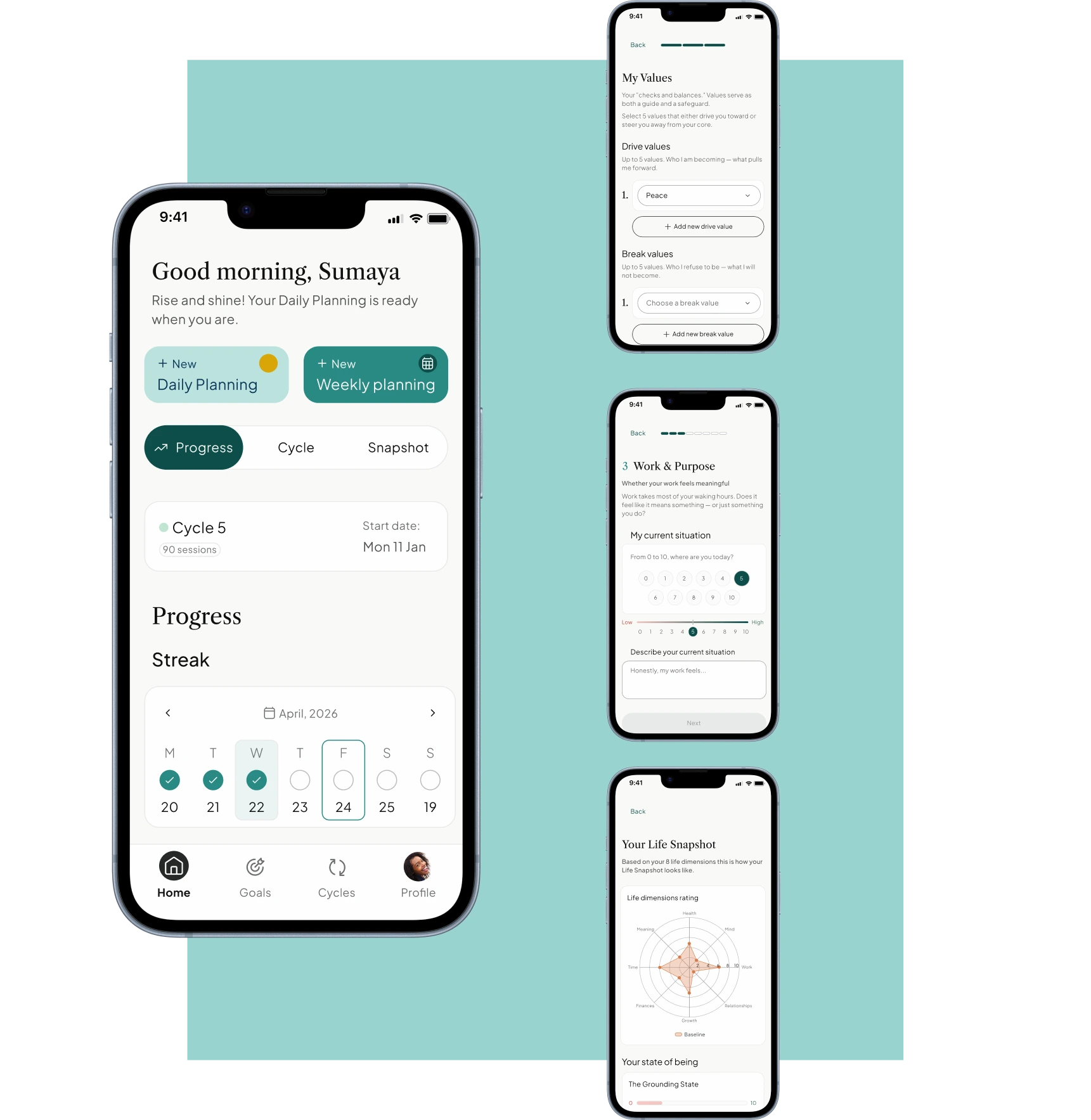
Imaginary Cloud acted as the primary product and technical partner for this project. Working from the founder's methodology and product direction, our team supported product discovery to translate it into a scalable application.
We started by defining the business case, researching user personas, and benchmarking similar apps. Next, we built the product foundation by mapping out user flows, a sitemap, and an initial version of the product backlog, while presenting style guide options for client selection. This paved the way for high-fidelity graphical user interfaces (GUIs) and a scalable design system.
The team experimented with Figma Make for initial brainstorming, but scaled back its use as the tool proved better suited for high-level ideation than for pixel-perfect, production-ready design execution.
On the development side, our engineers implemented the app using React and FastAPI. The team used the Figma MCP server and AI coding assistants, such as Cursor, to translate designs into code. We maintained rigorous, comprehensive code review throughout, ensuring the complex GUIs and application logic met production standards. We also led the QA effort, building custom scripts with seeded users to test the app's time-bound cyclical features on a staging environment.
 UN NOUVEAU PROJET EN TÊTE ? DISCUTONS-EN
pendant le projet
Given the short timeline and the evolving scope, we adopted a pragmatic, agile-inspired MVP approach. We minimised bureaucratic processes and opted for daily internal touchpoints and ad-hoc meetings with the client to showcase progress and ensure alignment.
Research & Ideation:
Design Execution:
Development & AI Integration:
Launch & Handover:
deux étapes
Migration
Développement
two stages
Migration
Development
quatre étapes
Recherche
Idéation
Exécution
Évaluation technique
quatre étapes
Besoins
Intégration back-end
Développement de site web
Filtrage et recherche avancés
quatre étapes
Recherche
Idéation
Exécution
Évaluation technique
quatre étapes
Backlog
Bootstrap
Vague 0
Vague N
quatre étapes
Recherche
Idéation
Exécution
Lancement et transfert
deux processus
MVP
ADP
Quatre étapes
Réunion de cadrage
Revue de code
Revue de test
Revue de qualité
Évaluation
Quatre étapes
Backlog
Bootstrap
Vague 0
Vague N
durant le projet
Given the short timeline and the evolving scope, we adopted a pragmatic, agile-inspired MVP approach. We minimised bureaucratic processes and opted for daily internal touchpoints and ad-hoc meetings with the client to showcase progress and ensure alignment.
Research & Ideation:
Design Execution:
Development & AI Integration:
Launch & Handover:
TECHNOLOGIES utilisées
Chosen as the primary UI library to build complex, component-rich user dashboards rapidly while ensuring high interactive performance and a scalable frontend architecture.
Integrated to enforce strict typing across the codebase, minimizing runtime errors, improving maintainability, and streamlining component communication during fast-paced iterations.
Selected as the build tool to provide lightning-fast hot module replacement (HMR) and optimized build performance, significantly accelerating the development feedback loop.
Utilized as the core backend language, ensuring clean, highly readable, and reliable server-side execution.
Chosen for its high-performance asynchronous execution, rapid endpoint setup, and automatic API documentation, enabling the delivery of a robust backend architecture.
Selected as the relational database solution to securely handle structured user entries, habit-tracking logs, and the application's complex 30-, 60-, and 90-day cyclical review data.
Chosen to provide enterprise-grade infrastructure security and cloud reliability. Furthermore, utilizing Azure AI Foundry seamlessly positions the platform for future AI-driven feature integrations.
Implemented to handle core revenue streams, enabling secure and frictionless payment processing for B2C monthly/annual subscriptions.
Integrated to deliver robust user authentication, secure identity management, and smooth onboarding out of the box.
Utilized for streamlined version control and seamless developer collaboration throughout the fast-paced delivery pipeline.
Leveraged to accelerate code generation and streamline routine engineering tasks across the entire stack.
Utilized to connect AI agents directly to Figma designs, translating visual layouts into accurate code structures and API requirements.
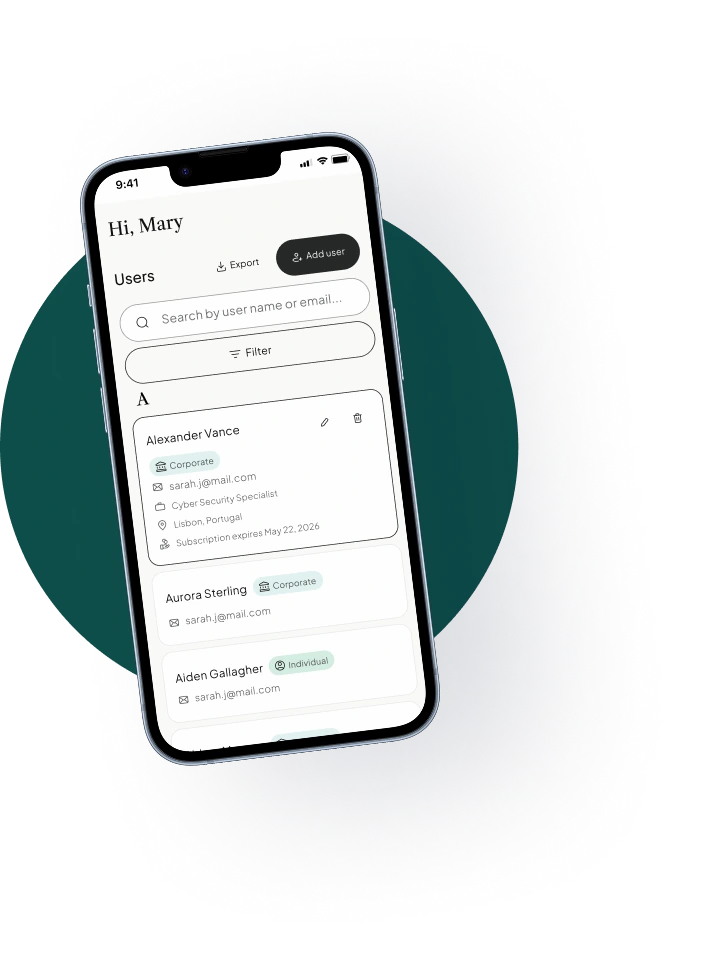
The client partnered with a Managed Team to meet the demands of a fast-paced timeline and navigate a major mid-project pivot as the scope shifted into the Orizion companion application. This cross-functional squad embraced an agile, AI-driven workflow to take the product from a high-level concept to a secure, stable staging launch.
The dedicated project team included:
Project Manager
Coordinated project timelines, managed client alignment, and prioritized features to deliver a lean, effective MVP. Beyond traditional project management, the PM provided product oversight by validating design decisions and identifying potential edge cases and functional gaps. Additionally, the PM acted as the final QA gate, performing rigorous testing across devices to guarantee a seamless handover to the client.
UX/UI Designers
Led the product discovery, user persona research, and end-to-end design system architecture. They experimented with Figma Make and Gemini to generate rapid initial references but executed the high-fidelity graphical user interfaces (GUIs) and brand identity manually to ensure pixel-perfect consistency. They also built robust documentation directly in Figma to seamlessly guide the engineering phase.
Backend Developers
Built the core application logic and engineered robust server-side performance using Python and FastAPI, backed by a relational PostgreSQL database to safely store user history and goal-tracking metrics. They accelerated the setup using Cursor and leveraged the Figma MCP Server to efficiently map data structures and backend API requirements straight from the design files.
Frontend Developers
Translated complex, data-heavy GUIs into a high-performing web interface using ReactJS, TypeScript, and Vite. They used Cursor to rapidly convert UI components and tokens into code, and seamlessly integrated critical user-facing infrastructure—including Auth0 for secure identity management and Stripe to process B2C subscription models.
Technical Team QA Collaboration
Rather than relying on a standalone tester, the frontend developer and PM collaborated to build custom scripts with seeded users. This allowed the team to thoroughly verify and validate the platform’s complex, time-bound cyclical review features on a staging environment before handing the code over via GitHub.
Ce projet a permis une compréhension approfondie du profil client et de son interaction avec le service.