Written by:

Last Published:
22 januari 2026
•
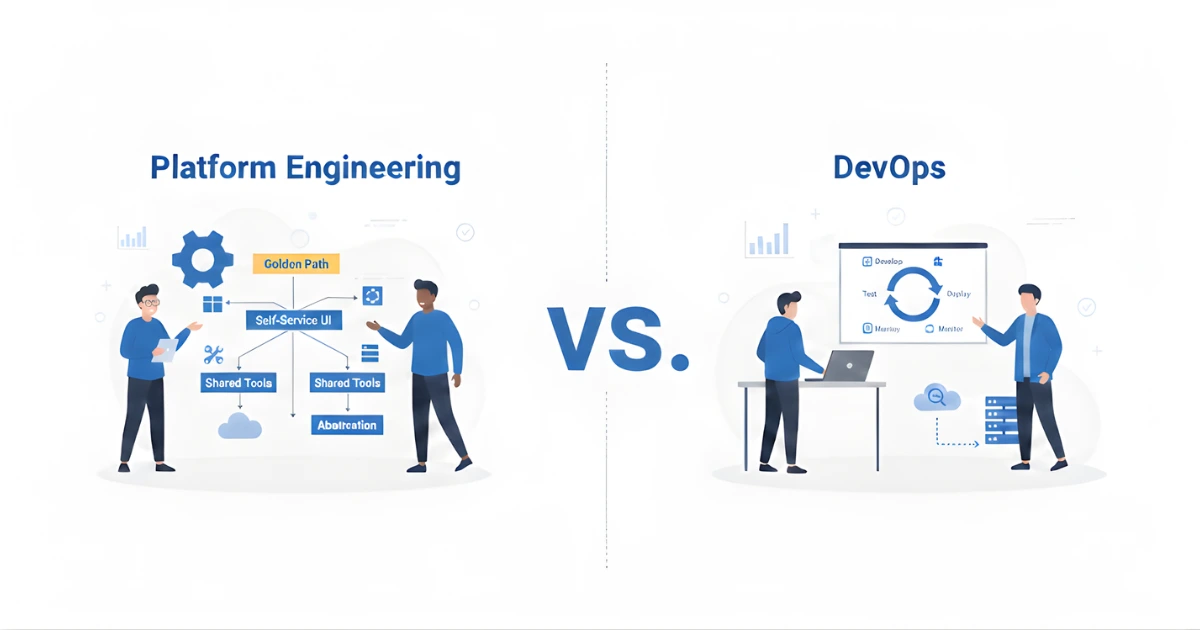
Platform Engineering vs DevOps är en vanlig jämförelse för team som skalar modern mjukvaruleverans.
DevOps syftar till att förbättra samarbete och automatisering, medan Platform Engineering bygger interna plattformar för att standardisera och förenkla hur utvecklare bygger, distribuerar och kör programvara.
Att känna till skillnaderna mellan Platform Engineering och DevOps hjälper ingenjörsledare att välja det bästa tillvägagångssättet för deras teams storlek, komplexitet och leveransstadium.
Plattformsteknik och DevOps fokusera på olika delar av programvaruleverans, även om båda syftar till automatisering, snabbare utgåvor och högre kvalitet.
DevOps är ett kulturellt och metodiskt tillvägagångssätt som förenar mjukvaruutveckling (Dev) och IT-drift (Ops). Det framkom för att bryta ner organisatoriska silor, främja samarbete och automatisera livscykeln för programvaruleverans så att team kan leverera programvara oftare och pålitligare.
DevOps fokuserar på metoder som kontinuerlig integration, kontinuerlig distribution (CI/CD), infrastrukturautomatisering och delat ansvar.
Plattformsteknik är ett specialiserat område som bygger på DevOps genom att skapa interna plattformar och självbetjäningsverktyg. Plattformsingenjörer behandlar dessa plattformar som produkter, de designar, bygger och underhåller verktygskedjor, API: er, miljöer och arbetsflöden, ofta kallade interna utvecklarplattformar (IDP).
Dessa plattformar döljer komplexitet och låter utvecklare fokusera på att skriva kod istället för att hantera infrastruktur.
I huvudsak:
forbes framhäver att Platform Engineering växer fram när organisationer skalas och kräver interna plattformar för att förenkla verksamheten och upprätthålla utvecklarhastigheten.
Många organisationer börjar med DevOps och använder senare Platform Engineering för att skala automatisering och utvecklarproduktivitet.
Du kan behöva göra det här skiftet om ditt team växer, det blir svårare att hantera många utvecklingsmiljöer eller om du behöver mer standardisering över tjänster.
Ledare tittar på dessa tecken för att veta när ett mer strukturerat tillvägagångssätt som Platform Engineering kan hjälpa deras organisation att skala och arbeta mer effektivt.
DevOps är en uppsättning metoder och kulturella värden som hjälper utvecklings- och verksamhetsteam att arbeta tillsammans. Detta leder till snabbare, mer tillförlitlig och skalbar programvaruleverans. DevOps handlar om hur team arbetar tillsammans under hela programvaruleveransprocessen.
DevOps handlar om automatisering, delat ägande och ständigt förbättring. Team som använder DevOps försöker skära ner på manuella steg, ta bort flaskhalsar och ge feedback mellan kodändringar och produktion snabbare.
Enligt Amazon webbtjänsterDevOps gör det möjligt för organisationer att ”leverera applikationer och tjänster i hög hastighet” genom att utveckla och förbättra produkter snabbare än traditionella utvecklingsmodeller.
Även om ansvaret varierar beroende på organisation, täcker DevOps-praxis vanligtvis:
- Kontinuerlig integration och kontinuerlig leverans (CI/CD)
Automatisera kodintegration, testning och distribution för att minska frisläppningsrisken och påskynda leveransen.
- Infrastrukturautomation
Hantera infrastruktur med hjälp av Infrastruktur som kod (IaC) för att säkerställa konsistens, repeterbarhet och skalbarhet.
- Övervakning, loggning och observerbarhet
Säkerställa att applikationer är tillförlitliga och presterande genom mätvärden, loggar och varningar i realtid.
- Incidenthantering och tillförlitlighet
Stöd för drifttid, felsökning av fel och förbättring av system genom granskningar efter incidenten.
- Säkerhetsintegration (DevSecOps)
Bädda in säkerhetskontroller i rörledningar och arbetsflöden snarare än att behandla säkerhet som en sista grind.
DevOps blir inte av med operativ komplexitet; det sprider ansvaret för det. När team och system växer kan detta delade ägande vara svårt att skala, varför många organisationer senare tittar på plattformsteknik.
Plattformsteknik handlar om att designa, bygga och underhålla interna plattformar så att utvecklingsteam kan leverera programvara snabbt och säkert utan att själva hantera komplex infrastruktur. Det förvandlar många DevOps-funktioner till en dedikerad, återanvändbar plattform.
Kärnan i Plattformsteknik är den interna utvecklarplattformen (IDP). En IDP ger utvecklare självbetjäningsåtkomst till infrastruktur, driftsättningsarbetsflöden och verktyg genom tydliga gränssnitt, API:er och mallar. Detta hjälper till att minska utvecklarens arbetsbelastning och säkerställer säkerhet, tillförlitlighet och efterlevnad.
Interna plattformar gör det möjligt för utvecklare att fokusera på kodning, medan plattformsteam hanterar komplexa operativa uppgifter.
Till skillnad från DevOps, som sprider ansvaret över team, har Platform Engineering ett dedikerat plattformsteam som fungerar som en intern produktgrupp. Detta team behandlar utvecklare som kunder och fokuserar på att göra saker enkla att använda, konsekventa och skalbara på lång sikt.
Plattformsteknik inkluderar vanligtvis:
- Självbetjäningsinfrastruktur och miljöer
Utvecklare kan tillhandahålla miljöer, tjänster och resurser på begäran utan manuella godkännanden eller djup kunskap om infrastruktur.
- Gyllene vägar och standardiserade arbetsflöden
Opinion, välstödda vägar för att bygga, distribuera och driva tjänster som kodar bästa praxis som standard.
- Abstraktion av komplexitet
Plattformen döljer underliggande moln, Kubernetes och verktygskomplexitet bakom konsekventa gränssnitt, vilket minskar duplicering mellan team.
- Säkerhet och efterlevnad genom design
Policyer, åtkomstkontroller och skyddsräcken är inbyggda i plattformen snarare än att verkställas manuellt eller retroaktivt.
Plattformsteknik ersätter inte DevOps-principer; det bygger på dem. De flesta organisationer börjar med DevOps och går över till Platform Engineering när de lägger till fler team, tjänster och operativa behov.
Exempel
Spotifys interna utvecklarplattform Bakom scenen, är en av de mest citerade verkliga plattformstekniska implementeringarna:

Plattformsutveckling och DevOps syftar båda till att hjälpa team att leverera programvara snabbare och mer tillförlitligt, men de skiljer sig åt i fokus, ägarskap och resultat.
Enligt Google Cloud, plattformsutveckling växte fram som ett svar på de utmaningar organisationer står inför när DevOps-metoder tillämpas oberoende av många team, vilket leder till en spridning av verktyg och inkonsekventa standarder. En central plattform hjälper till att standardisera dessa funktioner samtidigt som teamens autonomi bevaras.
På samma sätt lyfter Cloud Native Computing Foundation (CNCF) framhåller att plattformsutveckling gör det möjligt för team att ”bereda gyllene vägar” som kodifierar bästa praxis, vilket gör att utvecklare kan arbeta snabbare utan att kompromissa med tillförlitlighet eller säkerhet.
Kort sagt:
DevOps är inte bara en roll eller ett team. Det är en uppsättning ansvarsområden som delas av utvecklings- och driftsteam. Målet är att bygga en kultur av samarbete, automatisering och kontinuerlig förbättring under hela programvaruleveransen.
1. DevOps-ingenjör/Automationsingenjör
2. Releasehanterare/Distributionsspecialist
3. Site Reliability Engineer (SRE) (överlappar ibland DevOps)
4. Säkerhet och efterlevnad (DevSecOps)
Platform Engineering tar in ett dedikerat team för att bygga och underhålla en intern utvecklarplattform (IDP). Detta hjälper till att standardisera infrastruktur, verktyg och arbetsflöden i många utvecklingsteam.
Till skillnad från DevOps, som sprider ut ansvar, centraliserar Platform Engineering dem för att öka produktiviteten, skalbarheten och konsistensen.
1. Plattformsingenjör/Infrastrukturproduktingenjör
2. Utvecklarupplevelse (DX) specialist
3. Ledare för plattformssäkerhet och efterlevnad
4. Plattformsoperation/Tillförlitlighetsingenjör
DevOps passar bra för organisationer som vill ha bättre samarbete, automatisering och snabbare leverans, men inte behöver ett dedikerat plattformsteam. Det fungerar bäst för små till medelstora team och enkla leveranspipelines.
1. Små till medelstora team
2. Tidiga eller växande organisationer
3. Standardisering genom praxis, inte plattformar
4. Molnmigrerings- eller moderniseringsprojekt
Plattformsteknik är viktigt när en organisation växer ur vad standard DevOps kan hantera. Det centraliserar verktyg, infrastruktur och arbetsflöden, vilket hjälper stora ingenjörsteam att hålla fart, tillförlitlighet och konsistens.
1. Stora eller skalande team
2. Hög operativ komplexitet
3. Utvecklares produktivitetsutmaningar
4. Behov av standardisering och efterlevnad
5. Skalning av automatisering över team
Ja, Platform Engineering och DevOps fungerar bra tillsammans. DevOps skapar kulturen, automatiseringen och samarbetet för programvaruleverans, medan Platform Engineering formaliserar och skalar dessa förmågor i hela organisationen.
1. DevOps som grund
2. Plattformsteknik som en förlängning
3. Förbättrad utvecklarupplevelse
4. Skalning över team
Nej, Platform Engineering ersätter inte DevOps. Istället bygger den på och skalar DevOps-praxis för större, mer komplexa organisationer. DevOps handlar om kultur, samarbete och automatisering, medan Platform Engineering lägger till verktyg, arbetsflöden och självbetjäningsalternativ för att göra dessa metoder repeterbara och skalbara.
1. DevOps-principer förblir väsentliga
2. Plattformsteknik är en utveckling, inte en ersättning
3. Samarbetet fortsätter mellan team
Att välja mellan plattformsteknik och DevOps handlar inte om att välja det ena eller det andra. Det handlar om att förstå organisationens storlek, komplexitet och leveransbehov för att kunna skala på ett effektivt sätt.
1. Teamstorlek och struktur
2. Operativ komplexitet
3. Utvecklarproduktivitet och kognitiv belastning
4. Leveransfrekvens och skalbarhet
5. Krav på efterlevnad och säkerhet
DevOps lägger grunden genom samarbete och automatisering. Plattformsteknik skalar sedan dessa metoder med hjälp av interna plattformar och självbetjäningsflöden.
Vill du effektivisera leveranser och öka utvecklarnas produktivitet? Kontakta vårt team för att lära dig hur DevOps och plattformsteknik kan samverka i din organisation.

DevOps fokuserar på samarbete, automatisering och kontinuerliga leveransmetoder, medan Platform Engineering skapar interna plattformar för att standardisera arbetsflöden och skala utvecklarens produktivitet.
Nej. Plattformsteknik bygger på DevOps-praxis och skalar dem över team genom självbetjäningsplattformar och gyllene vägar, utan att ersätta DevOps kulturella principer.
Ja. DevOps tillhandahåller grundläggande metoder, verktyg och automatisering som Platform Engineering formaliserar och skalar för större team eller mer komplexa system.
Det minskar utvecklarnas kognitiva belastning, upprätthåller konsekventa standarder, automatiserar repetitiva uppgifter och förbättrar skalbarheten mellan flera team.
Absolut. DevOps sätter kulturen och automatiseringen, medan Platform Engineering tillhandahåller självbetjäningsplattformar, standardiserade arbetsflöden och interna verktyg för att utöka dessa metoder.
Organisationer använder vanligtvis plattformsteknik när team växer, leveranskomplexiteten ökar eller en konsekvent utvecklarupplevelse och skalbarhet blir avgörande.
Nyckelroller inkluderar plattformsingenjörer, utvecklare erfarenhetsspecialister, plattformssäkerhet och efterlevnadsledningar och plattformstillförlitlighetsingenjörer som underhåller den interna plattformen som en produkt.
Alexandra Mendes är Senior Growth Specialist på Imaginary Cloud med 3+ års erfarenhet av att skriva om mjukvaruutveckling, AI och digital transformation. Efter att ha avslutat en frontend-utvecklingskurs tog Alexandra upp några praktiska kodningskunskaper och arbetar nu nära med tekniska team. Alexandra brinner för hur ny teknik formar affärer och samhälle och tycker om att förvandla komplexa ämnen till tydligt och användbart innehåll för beslutsfattare.
People who read this post, also found these interesting: