Written by:

Last Published:
27 June 2026
•
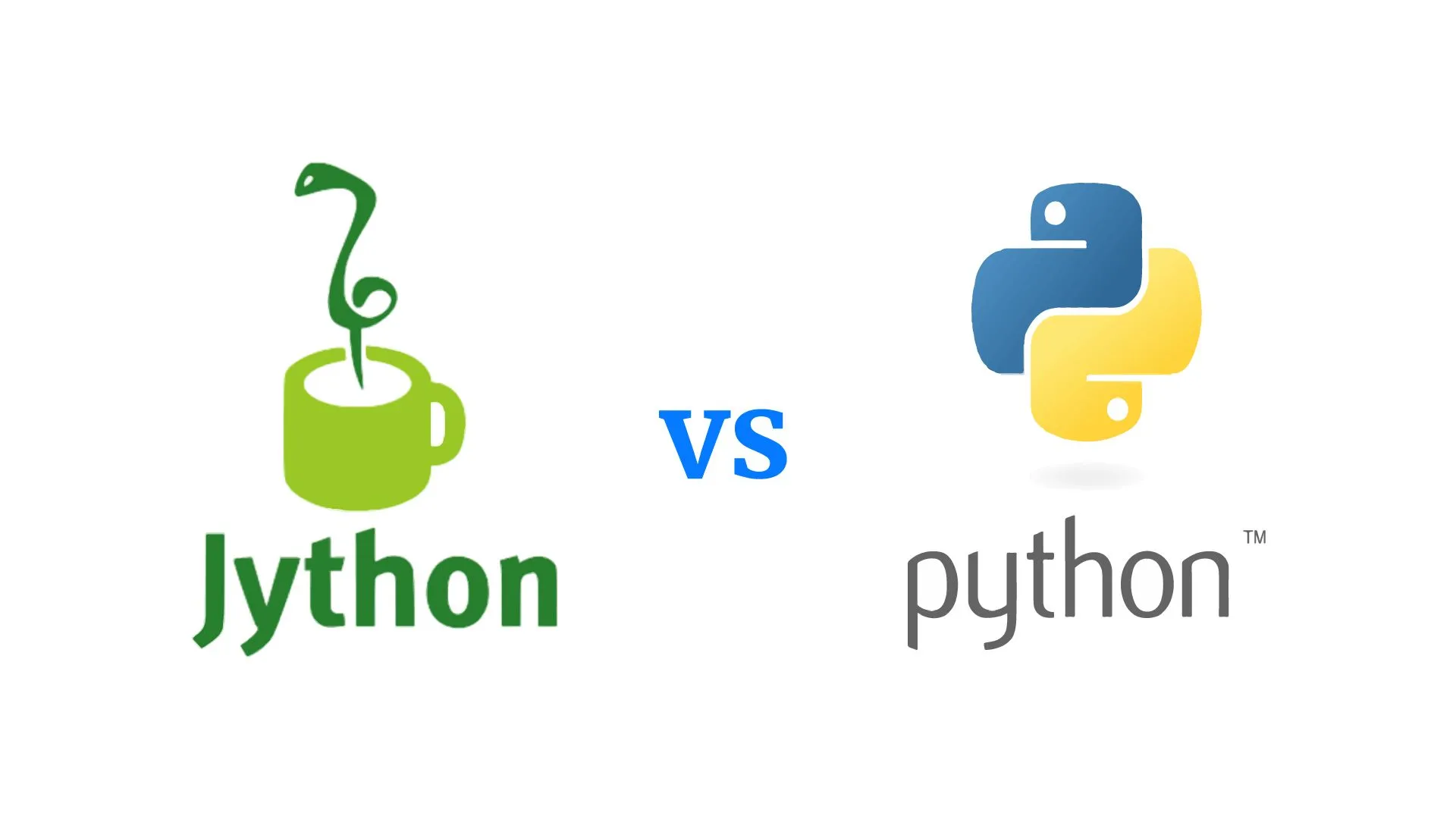
People treat Jython and Python as rivals. They aren't. They're two implementations of the same language, built for different jobs.
Jython is a Java implementation of Python. Put plainly, it's Python running on a Java Virtual Machine (JVM), so you write in Python but reach straight into Java's library shelves. Think of it as a bridge. You stand on the Python side, and it carries you into Java territory without asking you to learn a second language to cross.
So which one should your team actually use, and when? That's the real question, and it's the one this guide answers. We'll compare Jython and Python, look at why Jython still appeals to teams running Python on the JVM, and be honest about where its limits should make a technical leader stop and think. This isn't a "which is better" contest (they share the same core language). It's about what connecting Python to Java through Jython lets you do, and when a more modern alternative is the smarter call. Let's compare them.
Key takeaway:
Jython lets you write Python 2.7 syntax while running on the JVM and calling any Java library. That makes it genuinely useful for two things: embedding scripting inside a Java platform, and reusing the Java ecosystem from Python.
The catch is maturity. Jython only supports Python 2.7, and its last stable release was 2.7.4 in August 2024. So for new work that needs Python 3, teams increasingly reach for GraalPy (a Python 3 runtime for the JVM) or standard CPython with a Java bridge. Choose Jython when you already have a Java platform that needs embedded Python 2 scripting. Choose an alternative when you need Python 3, the modern data-science stack, or long-term support.
"Python" means the original C-based implementation, so whenever you read Python here, read CPython. It grew so dominant that the "C" simply went unspoken. Python is the reference everything else measures itself against.
Python is one of the most popular object-oriented programming languages in the world, usually mentioned in the same breath as Perl, Ruby, and Java. And it's still climbing. In GitHub's Octoverse 2024 report, Python overtook JavaScript as the most-used language on GitHub for the first time, a jump GitHub puts down to the surge in data science, machine learning, and AI work. Readable syntax, quick development, serious range. That's the appeal in a sentence.

Python's main strengths:
Java is another popular object-oriented language, with syntax in the C++ and C family. It's statically typed, which means it checks your types at compile time, before the program runs. That's the opposite of Python's dynamic typing, where the checks happen as the code executes.
Java's core traits:
Want the fuller head-to-head? See our in-depth Python vs Java comparison.

With Python and Java both in view, Jython clicks into place. Jython is a Java implementation of Python, built to run on the JVM and use Java classes. The name gives the game away: Jython = Java + Python.
Back to the bridge. You write Python, with its syntax and its logic, but you're standing inside a JVM, and Java's libraries are right there for the taking. Same familiar Python on your side of the river. A whole new district of tools on the other.
What Jython brings:
That's the whole idea. Jython is the bridge between the Java and Python worlds, and traffic flows both ways.

Python and Jython share a core language, but they keep very different company. Jython trades the CPython ecosystem for the Java one. Here's how that shakes out in practice.
Jython doesn't just bridge Python and Java. It opens up things neither one manages alone.
It's an easy language to learn and put to work, and it borrows real muscle from the Java libraries it can call. Spin up a quick GUI, query a database, test a bit of logic. All fast.
It also stays easy on the eye. Like Python, Jython structures code with indentation rather than braces. Put a simple if-statement in Java next to the same logic in Python/Jython and the difference jumps out:
Java
int score = 85;
if (score >= 50) {
    System.out.println("Pass");
} else {
    System.out.println("Fail");
}
Python / Jython
score = 85
if score >= 50:
    print("Pass")
else:
    print("Fail")
The second version is leaner. No curly braces, no semicolons, less ceremony. And that's the pitch in a nutshell: you drive Java libraries with Python's lighter syntax.
That if-statement only shows the syntax is lighter, though. Here's the part that actually earns its keep: reaching straight into a Java library and using it as if it were native Python. No wrapper, no bridge, no serialisation across a boundary.
# Jython: pull a Java class into Python and use it with Python syntax
from java.util import LinkedHashMap
from java.time import LocalDate

release = LinkedHashMap()
release.put("version", "2.7.4")
release.put("shipped", LocalDate.of(2024, 8, 1))

# Iterate a java.util map as if it were a native Python dict
for version in release.keySet():
    print("Jython {} shipped on {}".format(version, release.get(version)))

# -> Jython 2.7.4 shipped on 2024-08-01
Those are real java.util and java.time classes, called in-process, with Python doing the talking. That is the whole reason Jython exists.
The library access is the other half of the win. It lets teams move quicker through development and testing. Plus, because Jython compiles Python code to Java bytecode, it runs wherever the JVM runs, which keeps you cross-platform by default.
Here's the fact that's easiest to miss, and the one that matters most. Jython's most recent stable release is Jython 2.7.4, published in August 2024 (release notes on GitHub). Before that came 2.7.3 in 2022, and 2.7.2 in 2020. Notice the gaps. Releases land years apart, from a small volunteer team.
And every stable Jython release supports only Python 2.7, a version the Python Software Foundation stopped supporting back in January 2020. The project doesn't hide this. Its own documentation says plainly that running on Jython should not be treated as an alternative to porting your application to Python 3, pointing to both the language limits and how little maintenance time there is to go around. A Python 3 version of Jython? Talked about for years. Still not here.
For anyone making the call, that's a material risk, not a footnote. Build something new on Python 2.7 and you're inheriting a language that gets no more security or feature updates upstream, propped up by a project that ships rarely.
Concurrency is where Jython has a genuine edge. CPython carries a Global Interpreter Lock (GIL), a mechanism that lets only one thread run Python bytecode at a time, which throttles CPU-bound multithreading. Jython has no GIL. Every Python thread maps to a native Java thread, so heavy compute can actually run in parallel across cores. Standard CPython can't manage that without reaching for multiprocessing.
Is it a free win? Not quite. Jython still takes a module import lock on every import, so tight loops that keep importing inside threaded code pay for it. And because Jython is frozen at Python 2.7, it has none of the concurrency tooling Python 3 brought in. No asyncio. No async/await. None of the nicer concurrent.futures ergonomics. Teams building high-concurrency services today expect those Python 3 primitives as standard, and Jython simply can't hand them over.
The Python 3 gap goes deeper than a bit of syntax. Jython's lack of Python 3 support means more than ten years of Python 3 features are just missing: f-strings, type hints and the undefined module, undefined/undefined, undefined, undefined, matrix operators, and a long tail of standard-library upgrades. Any code, tutorial, or dependency written for Python 3, which is basically the whole ecosystem now, won't run on Jython as-is.
This is also where the data-science and machine-learning story falls down. NumPy, pandas, PyTorch, TensorFlow: they all lean on CPython's C-extension interface, and Jython doesn't implement it. So Jython can call JVM-based ML libraries like Deeplearning4j, but the mainstream Python ML stack, the very thing that pushed Python to the top of GitHub, stays out of reach.
For all that, Jython has carved out a niche it holds comfortably: an embedded scripting engine inside Java applications, where the point is to let people write Python against a running Java system.
The thread running through all of these? Jython earns its place where a Java platform already exists and wants a light scripting layer on top. Not as the ground floor of something new.
Here's the pattern that shapes how we advise clients. In the JVM modernisation work we take on, teams almost never chose Jython. They inherited it. It's like old wiring behind a wall in a house you've just bought. Nobody put it there on purpose, and nobody wants to be the one to touch it. So the real question is rarely "should we adopt Jython?" It's "what does it cost to move off it, and when does that bill come due?" Ask that early, before a Python 3 dependency or a security requirement forces your hand, and a looming migration becomes a planned one. That reframing is the most useful thing we bring to these conversations, and it's the step most teams skip.
If you need Python and Java working together, Jython isn't your only route anymore. The strongest Jython alternatives now speak Python 3. Chief among them is GraalPy, Oracle's Python runtime built on GraalVM. It's Python 3.12-compliant, runs on the JVM, embeds cleanly in Java, and is actively maintained. Its own benchmarks report pure Python running roughly 4x faster than CPython once JIT-compiled, with experimental support for native extensions like NumPy and PyTorch. For most new JVM-plus-Python projects, GraalPy is the natural successor to Jython.
A quick side-by-side to get your bearings:
| Aspect | CPython | Jython | GraalPy |
|---|---|---|---|
| Python version | 3.x (current) | 2.7 only | 3.12-compliant |
| Runs on the JVM | No | Yes | Yes |
| Java interop | Via a bridge (e.g. JPype) | Native, seamless | Native, seamless |
| Maintenance | Very active | Minimal (2.7.4, Aug 2024) | Active (Oracle / GraalVM) |
| C extensions (NumPy, etc.) | Full support | None | Experimental |
| Best for | Mainstream Python, ML/DS | Legacy Py2 + Java integration | New Python 3 + Java projects |
A feature table tells you what differs. It doesn't tell you what should actually drive the decision. When our engineering teams weigh a Python-on-the-JVM choice, we run it through a simple lens we call Fit-Risk-Horizon (FRH). Three questions, asked in that order, that reliably separate a safe pick from an expensive one.

Run FRH and the rule of thumb turns concrete:
So, back to where we started. This was never really a "Python vs Jython" contest. It's a question of fit. Jython pairs Python's lightweight syntax with the reach of the Java ecosystem, and for the right job that pairing is genuinely valuable: embedding Python scripting inside a JVM application, reusing Java libraries from Python code, or giving operators a friendly way to steer a Java system.
The honest caveat sits right next to the benefit. Jython's strengths are bolted to Python 2.7 and a slow release cadence. Where you can live with that, usually inside an established Java platform, Jython is still a sensible tool. Where you can't, CPython or GraalPy will treat your team better.
For a CTO, CDO, or engineering lead, the Jython question isn't really about syntax. It's about risk, cost, and delivery timescales. The Fit-Risk-Horizon lens is ordered the way it is on purpose: technical fit is necessary, but it's rarely enough on its own. The decisions that hurt are almost always the ones where risk and horizon got underweighted.
Integration risk. Jython's whole appeal is tight, in-process interoperability between Python and Java. Real capability, genuine pull. But it ties you to a runtime capped at Python 2.7. Any roadmap that assumes the modern Python 3 ecosystem (current libraries, security patches, engineers who already know Python 3) is heading straight for that ceiling.
Team upskilling and hiring. New engineers learn Python 3 and expect Python 3. In Stack Overflow's 2024 Developer Survey, Python was used by 51% of developers and ranked as the single most-desired language, while Python 2 has all but vanished from professional practice. That same survey pegged technical debt as developers' number-one workplace frustration. Standardising on an end-of-life dialect is technical debt by definition. In plain terms: a narrower hiring pool, slower onboarding, weaker retention. The upskilling cost runs the wrong way.
Maintenance exposure. Put real numbers on it. Python 2.7 hit official end-of-life on 1 January 2020, so that's more than five years with no upstream security or bug fixes. Jython's cadence tells the same story: 2.7.2 in 2020, 2.7.3 in 2022, 2.7.4 in August 2024. Roughly one release every two years, from a small volunteer team. Fine for a stable embedded scripting layer. A poor footing for a system you expect to grow and secure over a five-to-ten-year horizon, where the whole maintenance and patch burden lands on you.
Return on investment and time-to-value. The commercial case rarely hinges on raw performance, though the direction of travel is worth a glance: GraalPy reports pure Python running roughly 4x faster than CPython, with Python 3 and native Java interop in a single runtime. The bigger ROI lever is when you decide. Pick the runtime at the design stage and it's a scoped, estimable task. Trip over the constraint mid-delivery, when a required Python 3 library or an audit finding or a security patch forces it, and you've got an unplanned migration elbowing its way into the roadmap and pushing time-to-value back. The cheapest migration is the one you plan before you need it.
Timescales and lock-in. This choice bites hardest at the architectural forks. Reach for Jython on a greenfield service and you can quietly lock yourself into Python 2 semantics that cost real money to unwind later. If Python and Java interoperability is a true requirement, weigh GraalPy up front, well before a migration turns urgent. That protects your timescales and keeps your options open. It's exactly the trade-off competing pages tend to skate past, and it's the one most likely to hit delivery risk.
For budgeting, the cost of leaving Jython isn't one number. It scales with a handful of concrete factors, and naming them beats quoting a headline figure you'd only have to caveat. In our experience, the big swing variables are these:
The commercial takeaway is simple. Cost is driven by test coverage and interop depth, not by the language switch itself. Which is why a short, scoped assessment up front is worth far more than a rule-of-thumb guess, and why the teams that get burned are the ones that only price the migration once it's already unavoidable.
Yes, but only just. The most recent stable release was 2.7.4 in August 2024, from a small volunteer team, and releases tend to land years apart. It's alive enough to keep existing Python 2 integrations running, but it isn't under active feature development.
No. Every stable Jython release supports Python 2.7 only. A Python 3 version has been discussed for years but doesn't exist, and the project itself advises against treating Jython as a substitute for porting to Python 3.
Use Jython when you need to embed Python scripting inside an existing Java application, or call Java libraries directly and in-process, and when Python 2.7 is acceptable. For nearly everything else, especially data science, machine learning, or new Python 3 work, standard CPython is the better call.
CPython is the reference Python implementation: written in C, currently on Python 3.x, and compatible with the full PyPI and C-extension ecosystem. Jython is written in Java, compiles Python to Java bytecode, runs on the JVM, supports Python 2.7 only, and can use Java libraries but not CPython C extensions. That's the Jython vs CPython split in a nutshell.
No. NumPy, pandas, PyTorch, and the like depend on CPython's C-extension interface, which Jython doesn't implement. It can, however, call JVM-based libraries such as Deeplearning4j.
No. Unlike CPython, Jython has no GIL, so Python threads map to native Java threads and can run in true parallel across CPU cores. It does still use a module import lock, and it lacks Python 3 concurrency tools like asyncio.
GraalPy, Oracle's GraalVM-based runtime, is a Python 3.12-compliant implementation that runs on the JVM, embeds in Java, and is actively maintained. For new projects that need Python and Java in one runtime, it's generally the stronger option.
Yes. Jython is open source and available for both commercial and non-commercial use.
If your team is weighing up whether to bring Python workflows into a Java platform, we can help you assess the technical fit and the delivery risk, right down to whether Jython, GraalPy, or standard CPython is the right foundation for your roadmap. Tell us where you are in the process.
Content Writer and Digital Media Producer with an interest in the symbiotic relationship between tech and society. Books, music, and guitars are a constant.
People who read this post, also found these interesting: