
all
Business
data science
design
development
our journey
Strategy Pattern
Thank you! Your submission has been received!
Oops! Something went wrong while submitting the form.
Thank you! Your submission has been received!
Oops! Something went wrong while submitting the form.
Alexandra Mendes

16 January 2026

Min Read

What Is Cloud Infrastructure? Foundations of Cloud Native Platforms

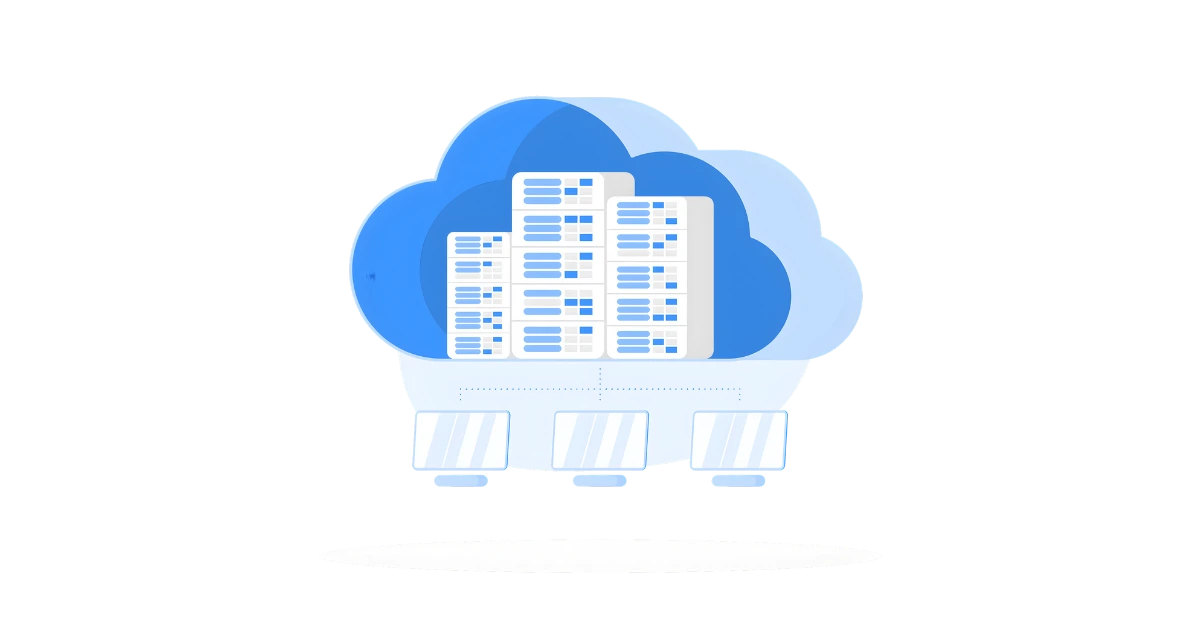
Illustration of cloud infrastructure with servers and databases inside a scalable cloud environment.

Cloud infrastructure comprises the physical and virtual resources, such as servers, storage, networking, and security, that enable the delivery of computing services over the internet. Abstracting hardware management, it allows organisations to provision, scale, and manage infrastructure on demand without operating physical data centres.

Beyond basic hosting, cloud infrastructure underpins modern cloud-native platforms, supporting containers, microservices, automation, and declarative configuration. These capabilities enable systems to scale dynamically and operate consistently across public, private, and hybrid cloud environments.

This guide explains cloud infrastructure from a practical engineering and architectural perspective. Rather than focusing on provider-specific features, it examines how cloud infrastructure is evaluated, designed, and operated across AWS, Azure, Google Cloud, and hybrid environments in real-world production systems.

blue arrow to the left
Imaginary Cloud logo

What Is Cloud Infrastructure?

Cloud infrastructure is the foundation of cloud computing, combining physical hardware with software-defined virtualisation, networking, and security. These resources are delivered as on-demand services, enabling organisations to access computing capacity without directly managing physical systems.

Major providers such as Amazon Web Services, Microsoft Azure, Google Cloud, and IBM Cloud operate global data centres that deliver scalable, resilient infrastructure through virtualisation and automation. This abstraction enables faster deployment, cost optimisation, and the adoption of hybrid and multi-cloud strategies that integrate public, private, and on-premises resources.

For instance, Netflix relies on AWS cloud infrastructure to deliver streaming content to more than 230 million subscribers worldwide. By leveraging AWS’s scalable compute and storage services, Netflix can dynamically adjust resources during peak usage periods, ensuring high availability and a smooth user experience.

blue arrow to the left
Imaginary Cloud logo

What Are the Core Components of Cloud Infrastructure?

Cloud infrastructure consists of several essential components that work together to deliver scalable, reliable, and flexible computing services. Understanding these components is crucial for technical professionals who design or manage cloud environments.

What Is Physical Infrastructure in the Cloud?

Physical infrastructure includes servers, storage systems, networking equipment, and security hardware housed in data centres. These facilities provide redundancy, power stability, and cooling to ensure continuous availability.

Providers like IBM Cloud and Oracle Cloud operate large-scale data centres that host this hardware globally.

How Does Virtualisation Work in Cloud Infrastructure?

Virtualisation abstracts physical resources into isolated environments such as virtual machines and containers. Hypervisors such as KVM, Hyper-V, Xen, and VMware enable efficient hardware utilisation and dynamic workload allocation.

 This forms the foundation for scalable, flexible, and resilient cloud deployments.

Key Components Supported by Virtualisation

  • Compute: Run applications in virtual machines or containers.

  • Storage: Supports block, file, and object storage for different data types.

  • Networking: Virtual private clouds, software-defined networks, and load balancers securely connect resources.

Benefits of Virtualisation

  • Improved hardware utilisation

  • Dynamic scaling of workloads

  • Isolation of applications for security and stability

What Cloud Architects Optimise for in Production Environments

While cloud provider documentation often focuses on features, cloud architects prioritise a different set of criteria once systems reach production scale.

In practice, teams optimise for:

  • Failure isolation: Designing infrastructure to prevent individual component failures from cascading across services.

  • Operational visibility: Ensuring monitoring, logging, and alerting are integrated at the infrastructure layer from day one.

  • Change safety: Supporting frequent, low-risk deployments through automation and immutability.

  • Security by default: Embedding identity, access, and network controls into infrastructure templates rather than applying them manually.

  • Organisational fit: Aligning infrastructure choices with team capabilities, not just technical ideals.

Practical takeaway:

The most effective cloud infrastructures are not the most complex, they are the ones teams can operate confidently under pressure.

blue arrow to the left
Imaginary Cloud logo

How Is Cloud Infrastructure Organised in Layers?

Cloud infrastructure is structured into logical layers that separate physical resources from applications, improving modularity, security, and operational efficiency.

  • Physical and Virtualisation Layers
    Provide compute, storage, networking, and hardware abstraction.

  • Infrastructure and Platform Layers
    Expose resources via APIs and managed runtimes, enabling IaaS and PaaS.

  • Application Layer
    Delivers fully managed software to end users (SaaS).

  • Security and Monitoring (Cross-Layer)
    Enforce identity, access control, compliance, and observability across all layers.

Key takeaways:

  • Clear separation of responsibilities

  • Enables automation and scalability

  • Supports IaaS, PaaS, and SaaS consistently

Cloud Infrastructure Decision Matrix (Practical Engineering View)

When selecting or designing cloud infrastructure, teams rarely optimise for a single factor such as cost or performance. In practice, decisions are driven by a combination of technical constraints, organisational maturity, and risk tolerance.

The matrix below reflects how cloud infrastructure choices are typically evaluated in real-world environments.

Primary Constraint Infrastructure Priority Practical Rationale
Unpredictable demand Public cloud Elastic scaling absorbs traffic spikes without overprovisioning
Strict data residency or compliance Private or hybrid cloud Greater control over data location, access, and auditability
Legacy systems integration IaaS-first Enables lift-and-modernise without full re-architecture
Developer velocity PaaS + containers Reduces operational overhead and accelerates release cycles
Cost predictability Hybrid or reserved capacity Minimises exposure to variable usage-based billing
High availability requirements Multi-region public cloud Built-in redundancy and automated failover

Understanding these trade-offs early helps organisations avoid architectural rework and unexpected operational costs.

Example:
Spotify uses cloud services, including Google Cloud Platform (GCP), to deliver personalised music experiences and supports scalable, continuous deployments across distributed systems.

blue arrow to the left
Imaginary Cloud logo

Section 4: How Does Cloud Infrastructure Support Cloud-Native Platforms?

Cloud-native platforms rely on cloud infrastructure to deliver modern, scalable, and resilient applications. Understanding this relationship is essential for engineers and technology leaders designing systems that must operate efficiently across dynamic environments.

What Are Cloud-Native Platforms?

Cloud-native platforms are software environments designed to exploit cloud infrastructure capabilities. They use operational flexibility that enables rapid development, deployment, and updates without impacting system stability. 

How Do Containers Enable Cloud-Native Applications?

Containers are lightweight, portable units that bundle applications with all their dependencies, including libraries and frameworks. They provide consistent environments across development, testing, and production, reducing deployment friction and eliminating compatibility issues. Containers also allow multiple applications to run efficiently on the same physical hardware. 

What Are Microservices and How Do They Work?

Microservices decompose applications into small, independent services that perform specific functions. Each microservice can be updated, scaled, or replaced without affecting the rest of the application. This approach improves system resilience, accelerates release cycles, and simplifies maintenance.

What Is Immutable Infrastructure and Why Is It Important?

Immutable infrastructure is a deployment paradigm where servers remain unchanged after deployment. Rather than updating existing servers, new high-performance instances replace older ones when resources require scaling. This method makes deployments predictable, simplifies rollback procedures, and reduces configuration drift.

How Do Declarative APIs and Automation Enhance Cloud-Native Platforms?

Declarative APIs allow developers to define the desired state of infrastructure rather than issuing manual commands. Automated reconciliation ensures that the system continuously matches the defined state, enabling infrastructure as code, consistency, and operational efficiency. Service meshes further enhance this layer by managing communication, load balancing, and security between microservices.

How Does Cloud Infrastructure Improve Agility, Scalability, and Resilience?

Cloud infrastructure provides the physical and virtual foundation for horizontal scaling, enabling applications to scale up or down as demand fluctuates. 

Virtualisation and automation improve resource utilisation, while monitoring and governance layers ensure high availability and system reliability. 

Containerised microservices enable higher deployment frequency and shorter startup times than traditional virtual machine deployments. 

Summary:

  • Supports scalable, resilient cloud-native applications.

  • Containers: portable environments for consistent deployment.

  • Microservices: modular, independently deployable application components.

  • Immutable infrastructure & declarative APIs: simplify scaling and maintenance.

  • Enhances agility, automation, and horizontal scalability.

Digital Transformation Service call to action

blue arrow to the left
Imaginary Cloud logo

What Are the Main Cloud Infrastructure Service Models?

Cloud infrastructure is delivered through different service models, each offering distinct levels of control, flexibility, and operational responsibility. Understanding these models helps organisations choose the right approach for their applications.

What Is Infrastructure as a Service (IaaS)?

Infrastructure as a Service (IaaS) provides virtualised computing resources, including servers, storage, and networking. Organisations manage the operating system, runtime environments, and applications, while the provider handles the underlying hardware. IaaS offers maximum flexibility and control, making it ideal for custom deployments and containerised microservices. 

What Is Platform as a Service (PaaS)?

Platform as a Service builds on IaaS by providing pre-configured environments with development tools, databases, and continuous integration pipelines. PaaS simplifies application deployment and accelerates development by reducing the need to manage infrastructure. While PaaS offers less customisation than IaaS, it is well-suited to standardised application development.

What Is Software as a Service (SaaS)?

Software as a Service delivers fully managed applications over the internet. Users access software without managing infrastructure or platforms. SaaS provides a hands-off experience, allowing organisations to focus on using applications rather than managing them.

Example:
Slack operates as a SaaS example running on cloud infrastructure to deliver real-time collaboration tools at high scale.

The table below summarises the key differences across control, management, and use cases.

Criteria IaaS PaaS SaaS
Control High – manage OS, runtime, applications Medium – manage applications and configuration Low – only use software
Management Organisation Provider Provider
Use Cases Custom architectures, legacy migrations, container platforms Application development, APIs, microservices Business apps, collaboration, analytics tools
Operational Overhead High Moderate Minimal
Scalability & Automation Requires configuration Built-in Handled by provider
Best For Teams needing flexibility & control Teams prioritising speed & developer productivity Organisations focused on application usage

What Are the Main Cloud Infrastructure Service Models?

Selecting the right service model aligns technical control with business priorities. Many organisations combine models to optimise cost, scalability, and delivery speed while avoiding vendor lock-in.

Key takeaways:

  • IaaS for control and custom architectures

  • PaaS for speed and developer productivity

  • SaaS for minimal operational overhead
blue arrow to the left
Imaginary Cloud logo

How Is Cloud Infrastructure Secured?

Security is a critical component of cloud infrastructure. Protecting resources, applications, and data requires a combination of identity management, access control, monitoring, and compliance practices.

What Is Identity and Access Management in the Cloud?

Identity and Access Management (IAM) defines who can access cloud resources and what actions they can perform. Strong IAM policies use multi-factor authentication, role-based access control, and single sign-on to ensure only authorised users can access sensitive resources. 

What Are Zero Trust Principles and How Are They Applied?

Zero trust security assumes that no access request is inherently trustworthy, regardless of network location. Each request is authenticated, authorised, and continuously validated. Implementing zero trust in cloud infrastructure enhances security by reducing the risk of lateral movement within systems and limiting exposure from compromised credentials.

How Is Continuous Monitoring Implemented?

Continuous monitoring and auditing detect suspicious activity and ensure compliance with regulatory requirements. Monitoring tools provide visibility into resource usage, performance, and security events. These tools help organisations respond quickly to incidents, maintain operational integrity, and enforce policies effectively. 

How Does Cloud Infrastructure Support Compliance?

Cloud providers implement security controls, encryption, and auditing to help organisations meet industry and regulatory standards. Compliance frameworks are often integrated with IAM and monitoring systems, enabling organisations to demonstrate compliance with laws such as GDPR, HIPAA, and ISO standards.

Why Is Security a Foundational Layer of Cloud-Native Platforms?

Cloud-native platforms rely on secure infrastructure to support automated deployments, containers, and microservices. By embedding security at every layer, from physical hardware to identity management, organisations can scale applications while maintaining confidentiality, integrity, and availability. 

blue arrow to the left
Imaginary Cloud logo

What Is Hybrid Cloud Infrastructure and How Does It Work?

Hybrid cloud infrastructure combines public cloud, private cloud, and on-premises resources to provide flexibility, optimise costs, and meet regulatory requirements. It enables organisations to select the appropriate environment for each workload while maintaining control over critical data and applications.

Why Do Organisations Adopt Hybrid Cloud Models?

Organisations adopt hybrid cloud models to balance scalability, cost efficiency, and control. Public clouds provide elastic resources for variable workloads, while private clouds and on-premises systems handle sensitive data or legacy applications. This combination prevents vendor lock-in and enables the strategic placement of workloads to meet business requirements. 

How Does Hybrid Cloud Infrastructure Improve Flexibility and Scalability?

Hybrid cloud infrastructure allows applications to scale horizontally by dynamically moving workloads between public and private environments. This ensures that systems maintain performance during demand spikes while optimising resource usage. Elastic scaling reduces the need for overprovisioned hardware and improves operational efficiency.

What Are the Security Considerations in Hybrid Cloud Environments?

Hybrid environments require consistent security policies across all platforms. Identity and access management, encryption, and continuous monitoring must span both cloud and on-premises resources. Implementing zero trust principles helps secure data as it moves between environments. 

How Do Organisations Manage Compliance in Hybrid Clouds?

Hybrid cloud infrastructure requires integrated compliance monitoring to meet regulatory requirements. Organisations must enforce policies consistently across environments, maintain audit trails, and ensure encryption and data residency standards are met. Cloud providers often provide tools and templates to simplify compliance management.

Why Is Hybrid Cloud Important for Modern Applications?

Hybrid cloud infrastructure enables organisations to leverage the scalability of public cloud scalability and the control of private cloud control. It supports cloud-native platforms, automated deployments, and continuous integration while ensuring sensitive workloads remain secure and compliant. 

Common Cloud Infrastructure Pitfalls in Real Organisations

Cloud infrastructure initiatives often fail not because of technology limitations, but because of misaligned expectations.

Common pitfalls include:

  • Designing for hyperscale when workloads are stable and predictable

  • Adopting containers without sufficient operational maturity

  • Treating security as a post-deployment concern

  • Underestimating the complexity of hybrid connectivity and identity management

  • Optimising for short-term cost instead of long-term operability

What matters most in practice:

Infrastructure should evolve incrementally, guided by actual usage patterns and team capabilities.

Summary:

  • Combines public, private, and on-premises resources for flexibility.

  • Supports dynamic workload scaling and cost efficiency.

  • Security and compliance must be consistent across all environments.

  • Enables cloud-native platforms while protecting sensitive data.
blue arrow to the left
Imaginary Cloud logo

Final Thoughts

Your cloud infrastructure determines how quickly and securely your organisation can scale. With the right design, you can improve resilience, automation, and efficiency across IaaS, PaaS, SaaS, and hybrid environments.

Infrastructure models that align with these answers consistently outperform theoretically “optimal” architectures.

Take action today: assess your cloud infrastructure, identify optimisation opportunities, and get a clear, actionable roadmap tailored to your business. Contact us now to start scaling smarter and faster.

Artificial Intelligence Solutions  done right - CTA
blue arrow to the left
Imaginary Cloud logo
blue arrow to the left
Imaginary Cloud logo

Frequently Asked Questions (FAQ)

What Is Cloud Infrastructure in Simple Terms?

Cloud infrastructure provides computing resources such as servers, storage, and networking over the internet, eliminating the need to manage physical hardware.

How Does Cloud Infrastructure Work?

It virtualises physical hardware in data centres, delivering resources on demand via software interfaces, while providers manage the underlying systems.

What Are the Main Components of Cloud Infrastructure?

The main components are physical hardware, virtualisation, compute, storage, networking, and software-defined management tools.

How Is Cloud Infrastructure Different From On-Premises Infrastructure?

Cloud infrastructure abstracts hardware management, offering scalable, on-demand resources, whereas on-premises requires owning and maintaining physical systems.

Is Cloud Infrastructure the Same as IaaS?

No, IaaS is a service model that exposes cloud infrastructure resources, while cloud infrastructure also supports PaaS, SaaS, and cloud-native platforms.

What Is Hybrid Cloud Infrastructure?

Hybrid cloud combines public, private, and on-premises resources, allowing workloads to run in the most suitable environment for performance, security, or compliance.

How Secure Is Cloud Infrastructure?

It is secured with identity management, encryption, monitoring, and compliance controls, with responsibilities shared between the provider and the organisation.

Why Is Cloud Infrastructure Important for Cloud-Native Platforms?

It provides the foundation for scalable, automated, and resilient platforms that support containers, microservices, and continuous delivery.

Can Cloud Infrastructure Support Modern DevOps Practices?

Yes, it enables automation, infrastructure as code, monitoring, and continuous integration for faster, stable deployments.

When Should an Organisation Use Cloud Infrastructure?

Use it when scalable, flexible, and cost-efficient computing is needed, especially for modern applications that require rapid adaptation.

Alexandra Mendes
Alexandra Mendes

Alexandra Mendes is a Senior Growth Specialist at Imaginary Cloud with 3+ years of experience writing about software development, AI, and digital transformation. After completing a frontend development course, Alexandra picked up some hands-on coding skills and now works closely with technical teams. Passionate about how new technologies shape business and society, Alexandra enjoys turning complex topics into clear, helpful content for decision-makers.

LinkedIn

Read more posts by this author

People who read this post, also found these interesting:

arrow left
arrow to the right
Dropdown caret icon