
Redesigning Eurofound’s Digital Experience
.webp)
About this project
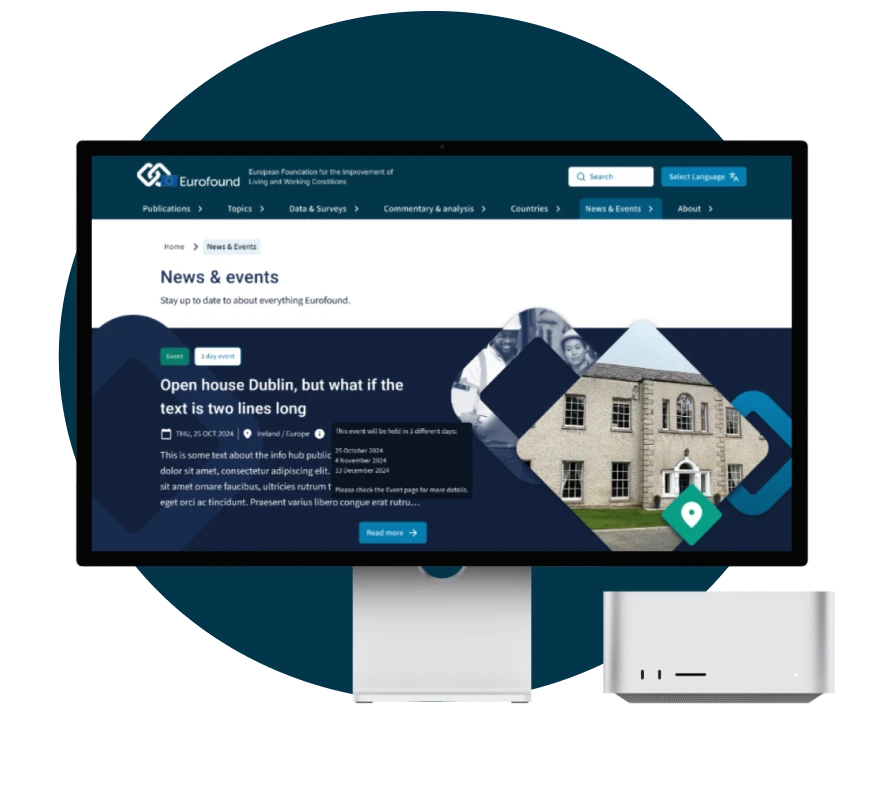
As Project 2, Imaginary Cloud led the complete redesign and reorganisation of the Eurofound website. We delivered it through our product design process.
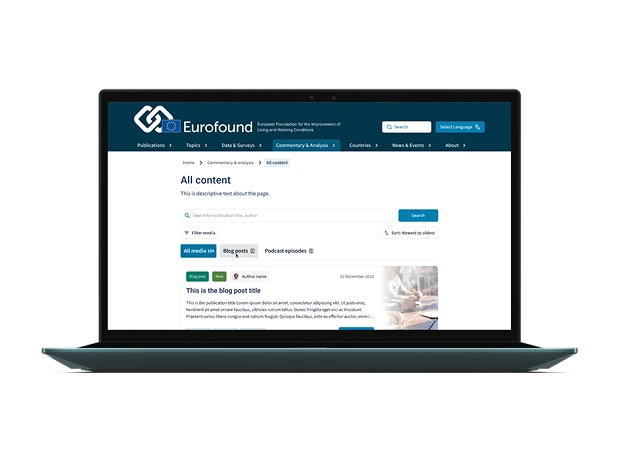
Result: A significantly enhanced user experience, achieved through a more intuitive site structure and navigation, alongside a refreshed visual identity that stays faithful to the organisation's established brand. (mantém o link "Read phase 1.")
our INVOLVEMENT
Design
Development
technologies
Storyblok
Next.js
React
Vercel
GitHub
GitHub Actions
Typescript
Algolia
Headquartered in Dublin, Ireland, the European Foundation for the Improvement of Living and Working Conditions (Eurofound) is a European Union agency dedicated to providing knowledge that supports the development of better social, employment, and work-related policies.
Eurofound’s website serves as a key platform for sharing information, advice, and research on topics such as working conditions, sustainable work, industrial relations, labour market changes, quality of life, and public services. Its content is designed to support EU institutions, Member States, and Social Partners in shaping and implementing eective social and employment policies, while fostering social dialogue through comparative analysis and evidence-based insights.
.webp)
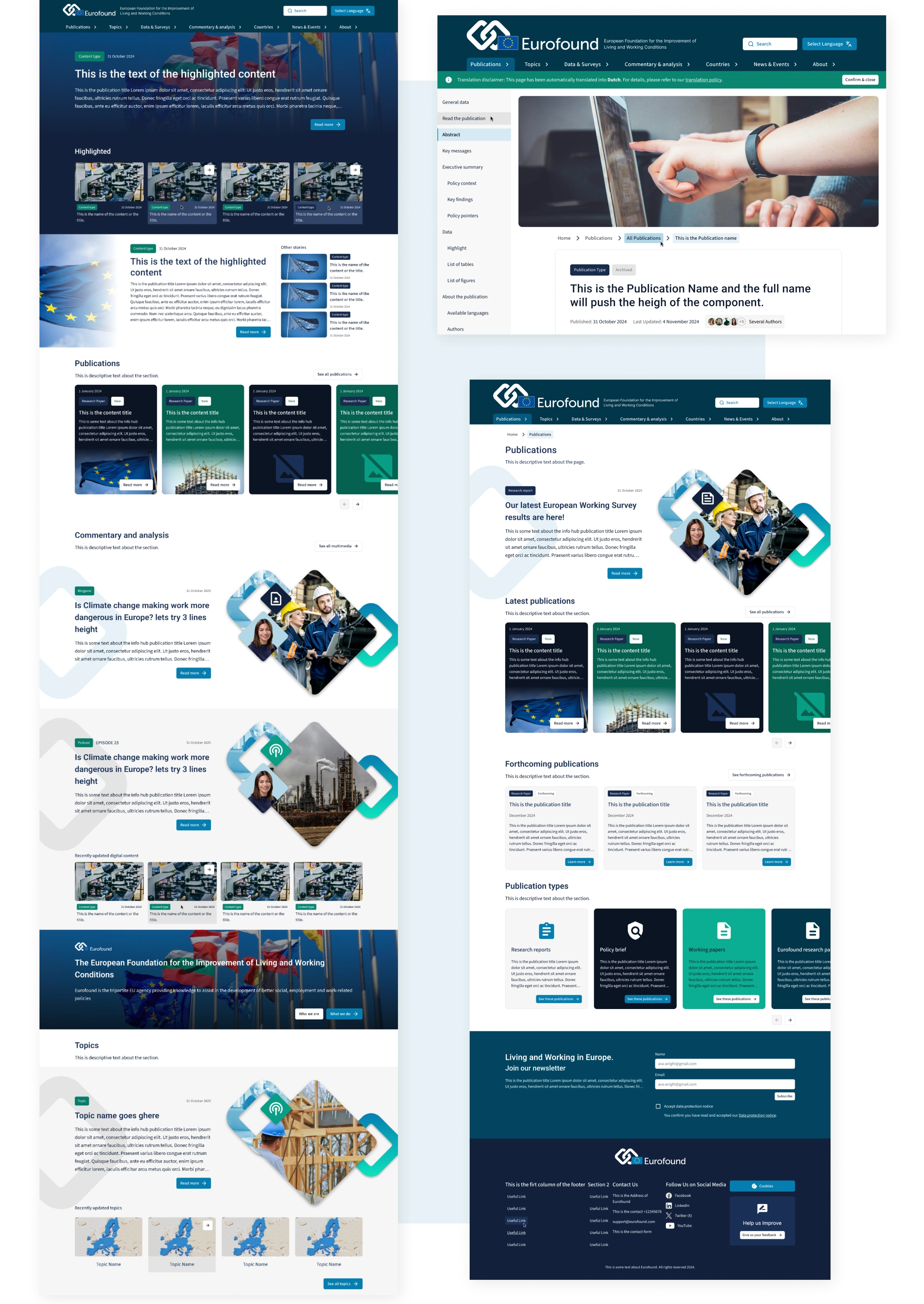
The Product Designer was instrumental in shaping the user experience and visual direction of the website. Through stakeholder workshops, they gathered insights to inform a modernised look and feel that aligned with Eurofound’s established brand identity while enhancing usability and accessibility.
The Project Manager provided strategic oversight throughout the engagement, ensuring the project stayed on schedule and within scope. They effectively navigated the complexities of a full website overhaul, including the transition to a new Content Management System (CMS), Storyblok.
Meanwhile, the Development team addressed significant technical challenges, including the preparation and migration of a large volume of legacy content into the new CMS. They were responsible for implementing the new website design, building key features, and developing integrations to support improved functionality and performance. This collaborative effort resulted in a fully redesigned, reorganised, and technically modernised website for Eurofound, laying the foundation for a more efficient and engaging digital presence.
 NEW PROJECT IN MIND? LET'S TALK
during the project
This website migration project followed a two-phase approach.
The initial phase involved a comprehensive UX Audit to identify areas for improvement and inform the design direction. Building on the audit’s insights, the project advanced through a structured Product Design Process (PDP) to ensure a user-centred redesign.
Once the design phase was complete, the development team adopted a Scrum framework to iteratively develop each page and implement key integrations, ensuring agility, transparency, and efficiency throughout the build.
Three stages
Analysis
Execution
MVP Launch
two stages
Migration
Development
four stages
Research
Ideation
Execution
Technical Assessment
four stages
Requirements
Back-end integration
Website development
Advanced filtering and search
four stages
Research
Ideation
Execution
Technical Assessment
four stages
Backlog
Bootstrap
Wave 0
Wave N
four stages
Research
Ideation
Execution
Launch & Handover
two processes
MVP
ADP
Four stages
Scope meeting
Code review
Test review
Quality review
Assessment
Four stages
Backlog
Bootstrap
Wave 0
Wave N
during the project
This website migration project followed a two-phase approach.
The initial phase involved a comprehensive UX Audit to identify areas for improvement and inform the design direction. Building on the audit’s insights, the project advanced through a structured Product Design Process (PDP) to ensure a user-centred redesign.
Once the design phase was complete, the development team adopted a Scrum framework to iteratively develop each page and implement key integrations, ensuring agility, transparency, and efficiency throughout the build.
TECHNOLOGIES used



Serves as the headless CMS, chosen for its flexibility in managing structured content and enabling content editors to work independently of the development process.
Powers the frontend with Reach, providing a fast, SEO-friendly, and dynamic user interface. This framework combination supports server-side rendering and static site generation for optimal performance.
Deployment platform that offers seamless integration with Next.js and enabling rapid, scalable, and globally distributed deployments
Facilitate robust version control and automate the CI/CD pipeline, ensuring reliable and efficient code delivery.
Enhances code quality and maintainability by introducing static typing, reducing runtime errors and improving developer productivity.
Integrated to deliver fast, relevant, and customisable on-site search functionality, significantly improving the content discovery experience.
The core team consisted of one Project Manager, one Product Designer, and three Developers.
Project Manager: Oversaw the entire project lifecycle, ensuring it stayed on track, within scope, and aligned with strategic goals. They managed timelines, coordinated communication between stakeholders, and facilitated the smooth adoption of the new CMS (Storyblok).
Product Designer: Led the user experience and visual design efforts. They conducted stakeholder workshops, carried out a UX audit, and drove the Product Design Process (PDP) to create a modern, intuitive interface that respected Eurofound’s brand.
Developers:
This project delivered an in-depth understanding of the customer persona and their interaction with the service.
Improved user experience with intuitive navigation and a refreshed visual identity aligned with the brand.
Stronger technical foundation through migration to Storyblok and use of Next.js for performance.
More efficient, user-friendly CMS to better support Eurofound’s diverse stakeholders.