
Imaginary Cloud’s website relaunch lead to a 5% increase in conversions in only 3 months

About this project
Recognising the importance of a stronger UI and UX in driving conversion, we redesigned our website following our Growth Audit and webflow process.
Result: The redesign led to a 5% increase in conversions, and the numbers continue to grow.
our INVOLVEMENT
Design
Development
technologies
Webflow
Motivated by our commitment to delivering an exceptional online experience, we conducted a Growth Audit using analytical tools such as Google Analytics and Hotjar, as well as ran real time user interviews in order to understand what users were really looking for when entering a software development website.
With Google Analytics, we dove deep into key metrics like time per page, bounce rate, and conversion rates. This quantitative data provided invaluable insights into user behavior, enabling us to pinpoint areas for enhancement. Armed with this knowledge, we fine-tuned our wireframes, optimizing engagement and creating a seamless user journey.
In parallel, Hotjar became our ally, capturing user interactions through heatmaps, session recordings, and user feedback. This qualitative data unveiled user preferences, pain points, and opportunities for improvement. It empowered us to iteratively refine our wireframes, ensuring they were intuitively designed to meet the ever-evolving expectations of our users.
The user interviews helped us shape Imaginary Cloud’s main persona who consist of users looking for a suitable service provider that is a good size and culture fit, and whose process is quick, flexible and adapted to their needs.
While the initial website revamp brought significant improvements, it’s important to mention that digital landscapes are constantly evolving. The dynamic nature of user preferences, technological advancements, and market trends needs continuous monitoring and adaptation. By consistently analyzing data and gathering user feedback, we ensure that our website remains responsive, engaging, and aligned with the evolving needs of the modern users. This ongoing commitment allows us to deliver an exceptional online experience and stay ahead in a competitive digital world.
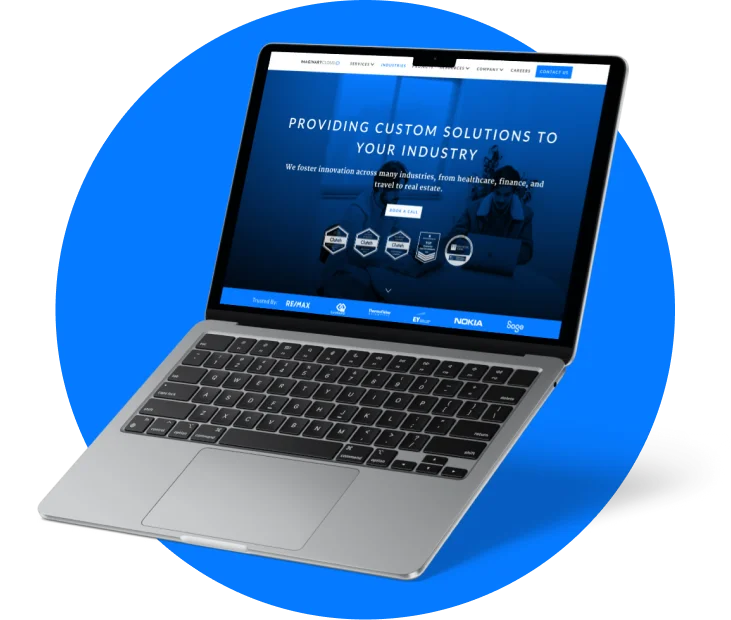
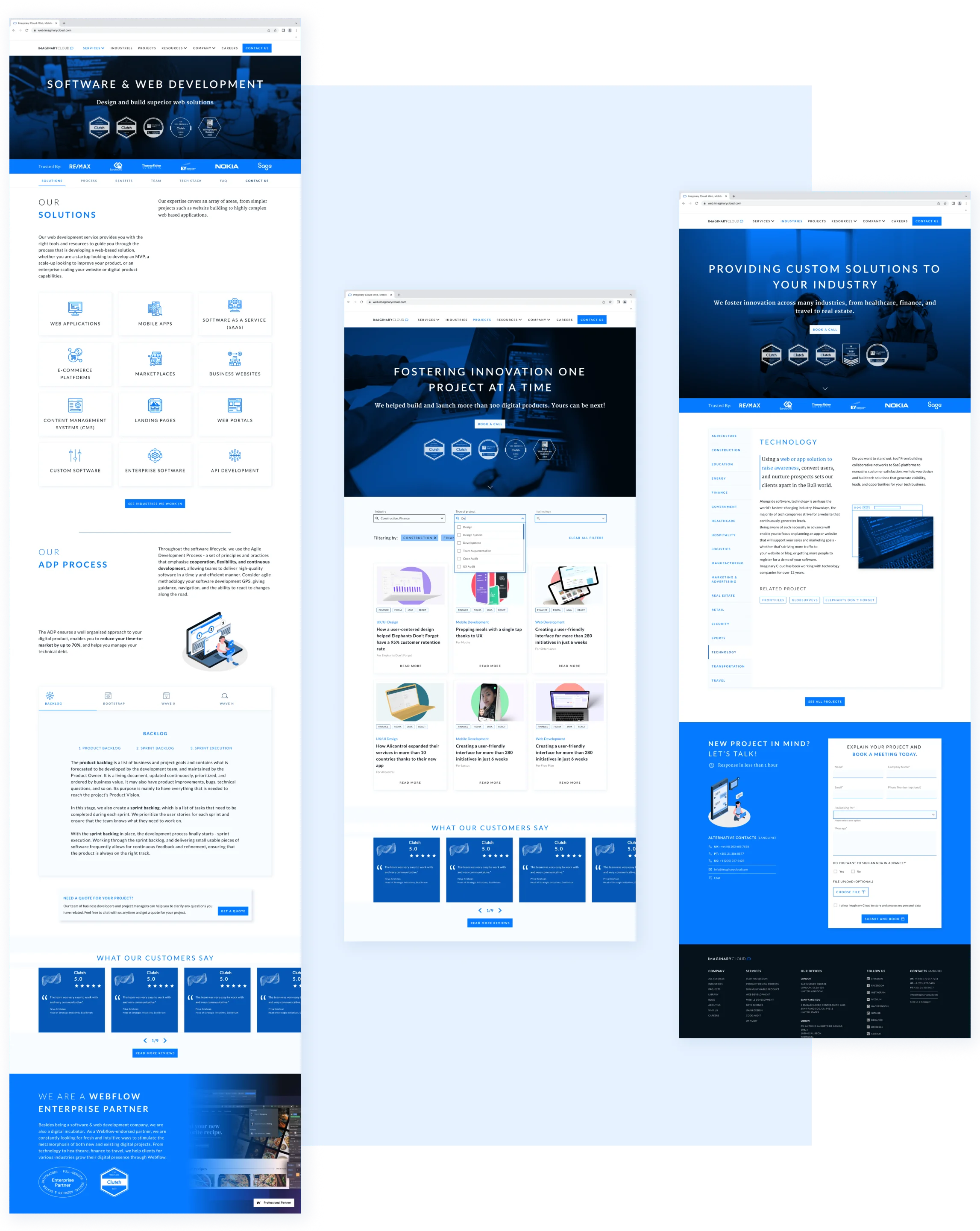
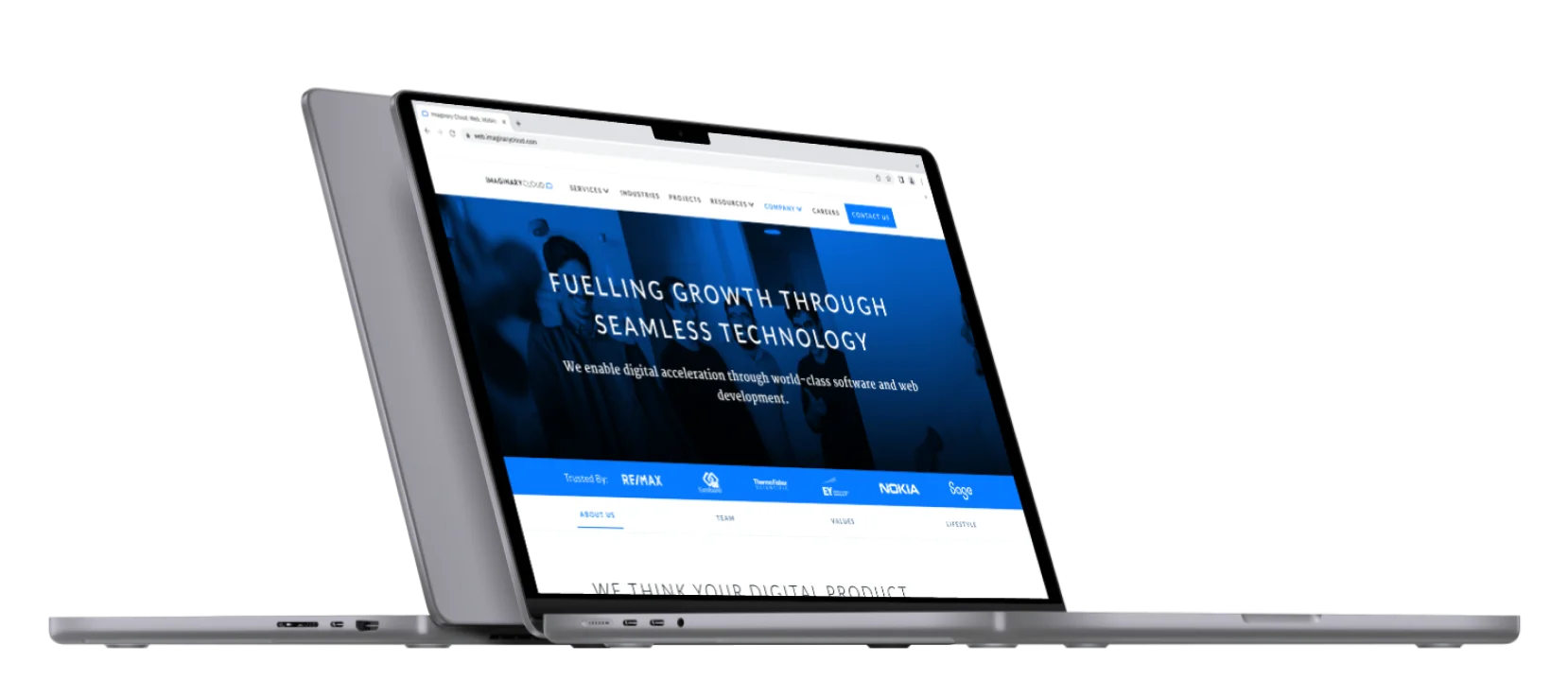
Since we had a deep understanding of our systems, data, and content structure, we carried out both the design and implementation of Imaginary Cloud’s website in-house.
Our design team crafted a style guide, a design system and all wireframes on Figma, considering the principles of usability, accessibility, and visual appeal. Following design approval, we proceeded with the development phase. Our Webflow development team used all the best practices identified in the analysis phase to bring the wireframes to life. We then focused on optimizing performance, responsiveness, and a seamless integration of all features and third-party tools.
Our knowledge enabled us to develop a meticulous plan and execute a smooth migration. We followed a well-thought-out approach, combining our expertise and strategic thinking to mitigate any possible challenges. Thorough testing, comprehensive backup plans, and careful implementation ensured a seamless migration process.
 NEW PROJECT IN MIND? LET'S TALK
during the project
For this revamp, we leveraged our own PDP (Product Design Process). Recognizing the significance of a structured and user-centric approach, we started this project with a clear roadmap in place.
Throughout the process, regular feedback loops and iterations ensured that we stayed aligned and incorporated necessary fixes along the way.
Three stages
Analysis
Execution
MVP Launch
two stages
Migration
Development
four stages
Research
Ideation
Execution
Technical Assessment
four stages
Requirements
Back-end integration
Website development
Advanced filtering and search
four stages
Research
Ideation
Execution
Technical Assessment
four stages
Backlog
Bootstrap
Wave 0
Wave N
four stages
Research
Ideation
Execution
Launch & Handover
two processes
MVP
ADP
Four stages
Scope meeting
Code review
Test review
Quality review
Assessment
Four stages
Backlog
Bootstrap
Wave 0
Wave N
during the project
For this revamp, we leveraged our own PDP (Product Design Process). Recognizing the significance of a structured and user-centric approach, we started this project with a clear roadmap in place.
Throughout the process, regular feedback loops and iterations ensured that we stayed aligned and incorporated necessary fixes along the way.
TECHNOLOGIES used


Our website was already built on Webflow; by staying within the same ecosystem, we maximized efficiency as our familiarity with the platform enabled us to leverage its features, intuitive interface, and extensive customization options.
We created the style guide, the design system and the new wireframes on a collaborative Figma file.
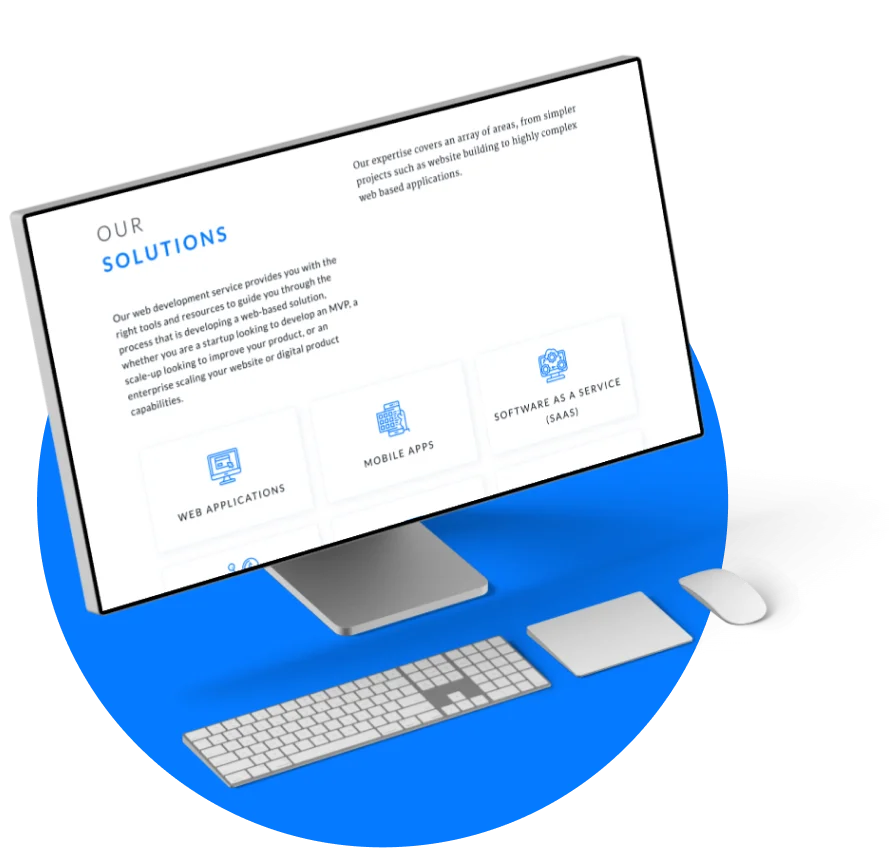
We implemented the Managed Project Working Model which involved developing the project entirely in-house.
The team had a Project Manager who oversaw planning, coordination, and execution, managing timelines, resources, and objectives; 4 designers who collaborated on the creating of the design and implementation of the new pages through Webflow; and 2 developers that worked alongside 2 Growth specialists to optimize performance, code and to help mitigate potential risks during the migration phase
This project delivered an in-depth understanding of the customer persona and their interaction with the service.
Increased conversions by 5% 3 months post-launch and still counting
Time spent on page increased 3%
Page abandonment rate decreased 4.26%
The average time per page on all our services pages is 69% longer
Created a captivating website that effectively communicates Imaginary Cloud’s services