Written by:

Last Published:
19 February 2026
•

AI engineering tools are the technologies that form the AI engineering stack used to build, deploy and scale production AI systems. This stack includes tools for data orchestration, feature management, model training, experiment tracking, deployment, monitoring and governance, ensuring models move reliably from prototype to measurable business impact.
As organisations move from experimentation to enterprise adoption, scaling AI systems requires more than strong models. It requires resilient infrastructure, observability and cost control. In this guide, you will learn how to design an essential AI engineering stack, which tool categories matter most, and how to align your AI infrastructure with long-term growth objectives.
In short:
AI engineering tools are the technologies that enable organisations to build, deploy and scale production AI systems reliably. Together, they form the AI engineering stack that supports data pipelines, model training, deployment, monitoring and governance across the full model lifecycle.
In production environments, performance, stability and compliance matter as much as model accuracy. AI engineering tools ensure reproducibility, enable CI/CD for ML, reduce technical debt in AI systems and provide the observability required to operate models at scale. Without them, AI initiatives often stall after experimentation.
Data science focuses on exploration, experimentation and model development. It answers the question, “Can we build a model that works?” AI engineering answers a different question: “Can we run this model reliably in production?”
While data scientists typically work in notebooks and experimental environments, AI engineering introduces structured data pipelines, model lifecycle management and automated deployment processes. It integrates MLOps practices such as CI/CD for ML, version control and monitoring to ensure models remain stable and traceable over time.
In short, data science optimises for insight and accuracy. AI engineering optimises for scalability, reliability and operational impact.
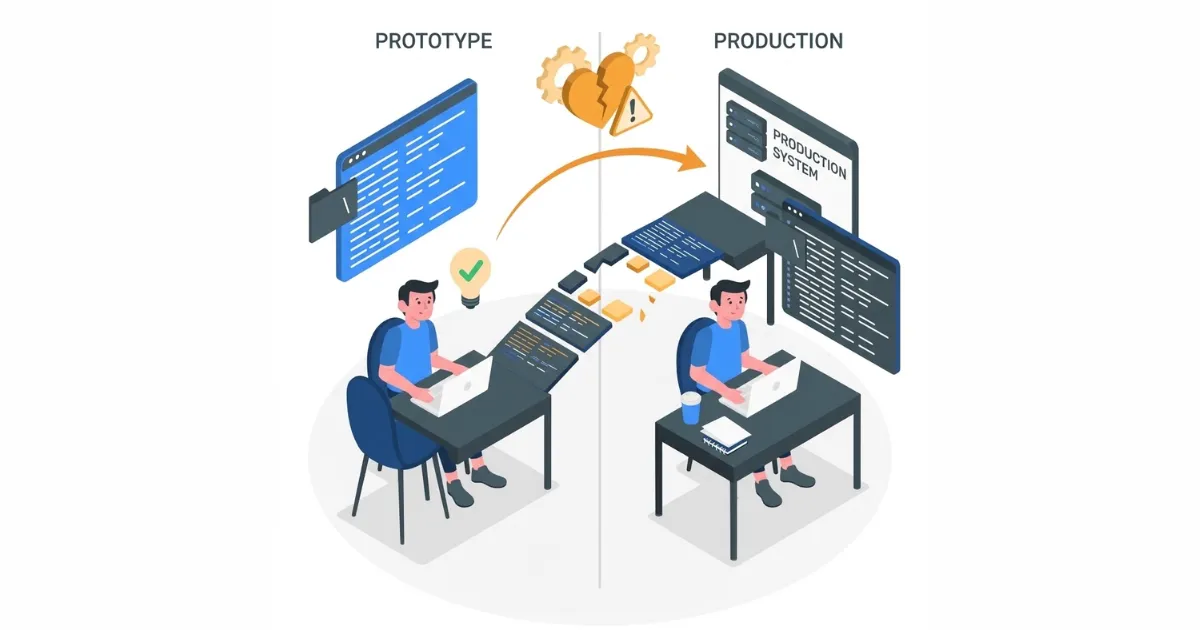
Many AI projects fail because organisations underestimate the complexity of moving from prototype to production.
This move requires more than strong models. It demands robust infrastructure, similar to the challenges discussed in our guide on scaling infrastructure for growth.
Common causes of failure include:
Harvard Business Review highlights that organisational readiness and governance are among the main barriers to scaling AI successfully.
Without monitoring for model drift and performance degradation, systems gradually lose accuracy. Over time, unmanaged complexity makes updates slower and riskier, increasing operational costs and reducing trust in AI systems.
This challenge is well documented in research on hidden technical debt in machine learning systems, which highlights how data dependencies, pipeline fragility and infrastructure coupling create long-term operational risk.
Production-ready AI refers to models that are not only accurate but also reliable, scalable and maintainable within real-world systems. It means the model can handle variable traffic, integrate with existing infrastructure and remain compliant with security and governance standards.
A production-ready AI system typically includes:
In practice, production readiness is about operational maturity. It ensures AI systems deliver sustained business value rather than short-lived experimental results.
A modern AI engineering stack is a layered architecture of tools that supports the entire AI lifecycle, from raw data ingestion to continuous monitoring in production. Rather than selecting isolated tools, organisations should design a cohesive system that ensures scalability, reproducibility and operational control.
The stack typically spans five core layers: data, feature management, model development, deployment and monitoring. Each layer reduces friction between experimentation and production, while enabling structured model lifecycle management.
Reliable AI systems begin with structured and automated data pipelines. Without consistent data ingestion, transformation and validation, downstream models become unstable.
Key tool categories include:
A feature store is particularly important in production AI, as it reduces discrepancies between training and live environments. This improves reproducibility and limits hidden technical debt in AI systems.
Model development requires structured experimentation and traceability. As teams scale, informal notebook workflows quickly become unmanageable.
A mature stack includes:
These capabilities enable proper model lifecycle management and ensure that models can be audited, retrained and compared systematically.
Deployment transforms trained models into scalable services that can handle real-world traffic and latency constraints.
Core deployment capabilities include:
CI/CD for ML ensures that model updates can be tested, validated and deployed automatically. This reduces risk and accelerates iteration cycles, especially when models require frequent retraining.
Monitoring is where many AI systems fail. Once deployed, models face changing data distributions, evolving user behaviour and infrastructure constraints.
A robust AI engineering stack includes:
Observability provides visibility into both infrastructure performance and model behaviour. Detecting model drift early prevents silent degradation that can damage business outcomes.
As organisations adopt large language models and generative AI systems, new operational challenges emerge.
LLMOps extends MLOps practices to cover:
Scaling AI systems that rely on foundation models requires additional layers of governance, cost control and evaluation. Without these controls, generative systems can introduce operational risk and escalating infrastructure costs.
A modern AI engineering stack is not defined by specific vendors but by its ability to support reproducibility, scalability, observability and disciplined model lifecycle management across the organisation.

Designing an AI engineering stack for scale requires architectural discipline, not just more tools. Scaling AI systems means handling increasing data volume, higher traffic, stricter latency requirements and evolving regulatory constraints, while maintaining reliability and cost control.
A scalable stack is modular, automated and observable by design. It embeds MLOps principles early, reduces technical debt in AI systems and supports continuous improvement through structured model lifecycle management.
Infrastructure is the backbone of scalable AI. As workloads grow, ad hoc servers and manual processes quickly become bottlenecks.
To scale effectively, organisations typically need:
Infrastructure must also support reproducibility. Training environments should mirror production conditions as closely as possible to prevent inconsistencies and deployment failures.
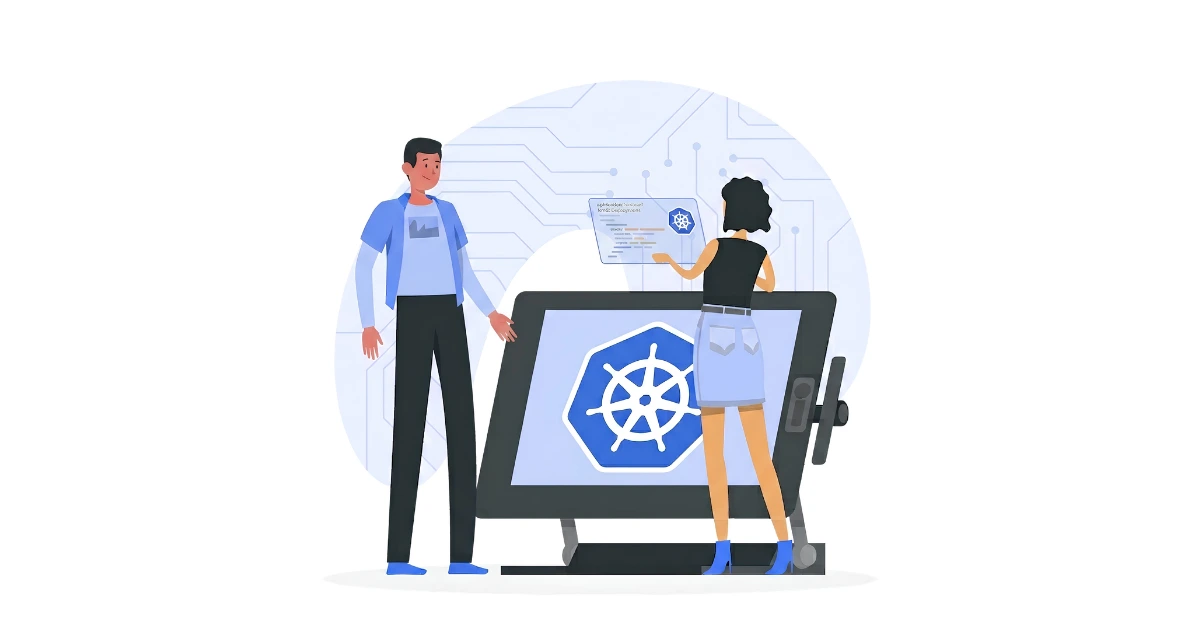
Kubernetes plays a central role in scaling production AI systems. It enables container orchestration, automated scaling and workload isolation across environments.
For AI engineering, Kubernetes supports:
When combined with CI/CD for ML, Kubernetes enables safe and repeatable model releases. It reduces operational risk and improves deployment velocity across teams.
The decision between managed services and custom infrastructure depends on scale, compliance and internal expertise.
Managed services are suitable when:
Custom infrastructure becomes necessary when:
A hybrid approach is common, combining managed model training with custom deployment and monitoring layers.
Many scaling challenges are not algorithmic but operational.
Typical bottlenecks include:
Without automation and monitoring, scaling increases system fragility. Observability becomes essential for diagnosing performance issues and identifying drift before it affects business metrics.
A well-documented example of scaling AI systems in production comes from Uber.
As the company expanded its use of machine learning across pricing, fraud detection, and demand forecasting, it faced significant operational challenges.
Models built by data scientists were difficult to deploy, monitor, and retrain consistently across teams.
To address these bottlenecks, Uber developed Michelangelo, a centralised machine learning platform designed to standardise the entire AI engineering stack. The platform supports:
By formalising model lifecycle management and embedding MLOps principles into its infrastructure, Uber was able to scale machine learning to thousands of models in production. These systems now serve millions of real-time predictions per second across global operations.
According to Uber Engineering, the Michelangelo platform reduced operational friction, accelerated experimentation cycles, and improved reliability across large-scale AI workloads.
Future-proofing requires anticipating growth, regulatory changes and evolving model architectures.
To prepare for long-term scalability:
Scaling AI systems is an organisational challenge as much as a technical one. A mature AI engineering stack provides the structure required to evolve safely, experiment faster and maintain trust in production AI over time.
Many organisations invest heavily in models but underestimate the complexity of operating them at scale. The result is fragmented tooling, rising infrastructure costs and fragile production systems. Avoiding common mistakes early reduces technical debt in AI environments and accelerates long-term scalability.
A mature AI engineering stack is not defined by how many tools it includes, but by how well those tools support model lifecycle management, reproducibility and observability across teams.
One of the most frequent mistakes is building enterprise-grade infrastructure before validating real business value.
Teams sometimes introduce complex MLOps platforms, distributed training clusters and advanced CI/CD for ML pipelines before confirming that the use case justifies the investment.
A better approach:
Premature complexity often increases technical debt in AI systems and slows iteration.
AI engineering sits between data science, DevOps and platform engineering. Without defined ownership, responsibilities become unclear.
Common symptoms include:
Scaling AI systems requires cross-functional alignment. Shared accountability ensures smoother CI/CD for ML and faster resolution of production issues.
Many organisations deploy models and assume they will remain stable. In reality, production environments evolve continuously.
Ignoring model drift leads to silent performance degradation. Without proper observability, teams only detect issues after business metrics decline.
To prevent this:
Monitoring is not optional in production AI. It is central to maintaining trust and long-term performance.
Tool sprawl creates integration challenges, inconsistent workflows and hidden inefficiencies.
Symptoms of fragmentation include:
An effective AI engineering stack prioritises interoperability and standardisation. Reducing duplication improves reproducibility and simplifies governance.
Technical debt in AI accumulates quickly when shortcuts are taken during experimentation. Hardcoded data paths, undocumented features and inconsistent environments eventually create operational risk.
Over time, this leads to:
Embedding MLOps practices early, including structured data pipelines, CI/CD for ML, and centralised model lifecycle management, helps prevent long-term instability.
Avoiding these mistakes transforms AI engineering from an experimental discipline into a scalable operational capability. The goal is not simply to deploy models, but to build systems that remain reliable, observable and adaptable as organisational demands grow.
Investing in AI engineering tools is not simply a technical decision. It shapes infrastructure cost, organisational structure and long-term scalability. Before selecting platforms or building custom solutions, technical leaders should evaluate business objectives, risk tolerance and internal capabilities.
A well-designed AI engineering stack should reduce friction across the model lifecycle, enable reproducibility and provide the observability required for production AI. Without strategic alignment, tooling decisions can create fragmentation and technical debt in AI systems.
The visible cost of AI infrastructure often focuses on compute, particularly GPU usage. However, the total cost of ownership is much higher.
Leaders should assess:
At scale, inefficient orchestration or unmanaged model drift can significantly increase infrastructure costs. Cost modelling should account for future growth, not just initial deployment.
AI infrastructure decisions should align with broader Digital Transformation strategy, particularly when modernising legacy systems.
For regulated industries, security and governance requirements directly influence stack design.
Considerations include:
Tools must support structured governance from development to deployment. Strong observability and version control are essential for audit readiness.
AI engineering investments should be evaluated by their measurable impact, not by technical sophistication.
Before committing to tooling decisions, define:
Aligning infrastructure with outcomes ensures the AI engineering stack supports revenue growth, cost optimisation or risk reduction rather than becoming an isolated technical initiative.
Not every organisation has mature MLOps capabilities in-house. In some cases, external expertise accelerates implementation and reduces costly missteps.
Consider external support when:
The right partnership can help design a scalable, future-proof AI engineering stack while avoiding unnecessary technical debt.
Strategic investment in AI engineering tools determines whether AI becomes a durable competitive advantage or an expensive experiment. The objective is operational maturity, predictable scalability and sustained business impact.
A recommended AI engineering stack in 2026 is not defined by a single vendor, but by a structured, layered architecture that supports scalability, reproducibility, observability and disciplined model lifecycle management.
As AI adoption matures, organisations require infrastructure that can handle foundation models, continuous retraining, cost control, and governance across distributed environments. The stack must support both traditional machine learning and emerging generative AI use cases, while embedding MLOps principles from day one.
Below is a simplified reference architecture for scaling AI systems.
This layer ensures reliable, automated data flows across systems.
Core capabilities:
Strong data foundations reduce model instability and prevent hidden technical debt in AI systems.
Feature consistency is critical for production reliability.
Key components:
This layer ensures that training and inference environments use consistent inputs, reducing performance discrepancies.
This layer formalises experimentation and model lifecycle management.
Capabilities include:
Structured experimentation accelerates iteration while preserving traceability and compliance.
Deployment infrastructure converts models into scalable services.
Essential elements:
This layer enables horizontal scaling and reduces deployment risk through automated ML CI/CD.
Once in production, AI systems must be continuously monitored.
Core capabilities:
Observability ensures early detection of issues and protects business performance from silent degradation.
This reference stack is not a rigid blueprint. It is a decision framework.
Leaders should:
Scaling AI systems successfully depends less on individual tools and more on architectural coherence and cross-functional ownership.
AI engineering tools turn promising models into reliable, scalable production systems. Without strong model lifecycle management, observability, and CI/CD for ML and AI initiatives, technical debt quickly accumulates and projects stall after the prototype stage.
If you are serious about scaling AI systems, now is the time to assess your stack. Speak with our team to uncover gaps, reduce risk and design an AI engineering architecture built for long-term growth.
AI engineering tools are technologies used to build, deploy and operate AI systems in production. They support data pipelines, model training, deployment, monitoring and governance. Unlike experimental data science tools, they focus on scalability, reproducibility, observability and structured model lifecycle management across environments.
An AI engineering stack includes tools for data ingestion, feature management, model development, deployment and monitoring. It typically covers data pipelines, experiment tracking, model registries, CI/CD for ML, container orchestration and drift detection. Together, these components enable reliable, production-ready AI systems.
Scaling AI systems requires automated data pipelines, containerised deployments, orchestration platforms such as Kubernetes and continuous monitoring. It also involves managing model drift, controlling infrastructure costs and implementing CI/CD for ML workflows. Strong observability and clear ownership are essential for maintaining performance at scale.
MLOps is a set of practices that automates and governs the machine learning lifecycle, including deployment and monitoring. AI engineering is broader. It includes MLOps but also covers system architecture, infrastructure design, scalability, governance and integration with enterprise platforms.
LLMOps requires tools for prompt management, evaluation, vector databases, monitoring and governance. It extends MLOps practices to large language models by addressing output quality, hallucination risks, cost control and retrieval workflows. Observability and version control remain critical in generative AI environments.
.webp)
Alexandra Mendes is a Senior Growth Specialist at Imaginary Cloud with 3+ years of experience writing about software development, AI, and digital transformation. After completing a frontend development course, Alexandra picked up some hands-on coding skills and now works closely with technical teams. Passionate about how new technologies shape business and society, Alexandra enjoys turning complex topics into clear, helpful content for decision-makers.
People who read this post, also found these interesting: