Written by:

Last Published:
24 February 2026
•
.webp)
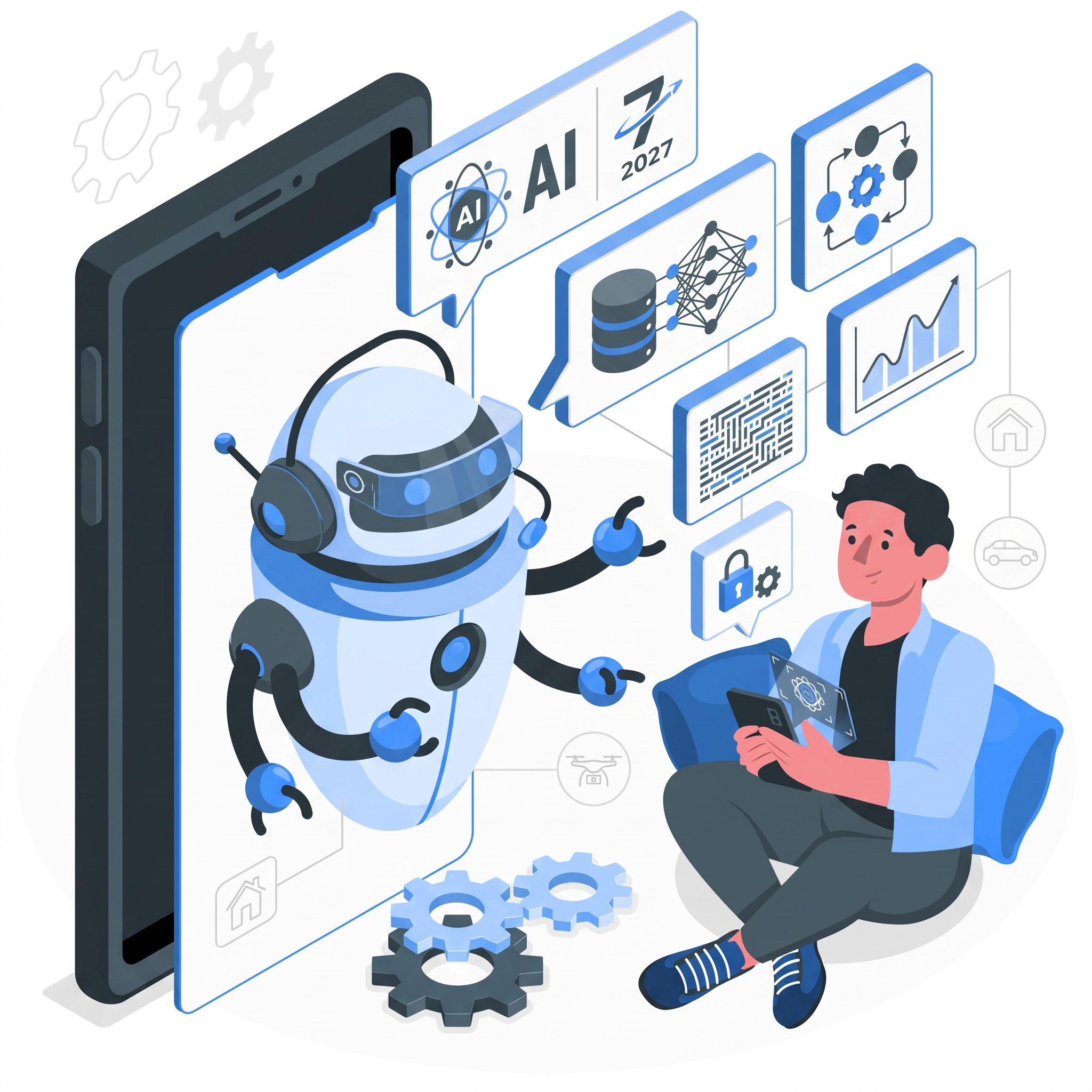
Vibe coding is an AI-first approach to software development in which engineers collaborate with large language models and code-generation tools as active contributors, not just assistants. Instead of writing every line manually, developers define intent, constraints, and outcomes, while AI accelerates implementation, testing, and iteration across the software lifecycle.
As AI-first workflows mature, vibe coding is reshaping how teams prototype, ship, and scale digital products. In this guide, you will learn what vibe coding means in practice, how it differs from traditional development, and what it changes for engineering teams and technology leaders.
Summary:
Vibe coding is an informal term for an AI-first approach to software development in which engineers collaborate with large language models as active contributors to the coding process. Instead of manually writing every function, developers define intent, constraints, and architecture, while AI generates, refines, and tests code.
Its core traits include rapid iteration, prompt-driven implementation, and continuous human oversight.
The term has emerged from developer communities discussing how tools such as code-generation models and AI-based pair-programming systems are reshaping day-to-day engineering. While not a formal methodology like Agile or DevOps, vibe coding reflects a behavioural shift: developers move from typing code line by line to orchestrating outcomes through structured interaction with AI systems.
At its core, vibe coding combines three elements:
It is less about replacing developers and more about redefining how they ship software.
Not exactly. AI-assisted programming typically refers to using tools that autocomplete code, suggest snippets, or fix syntax errors within a traditional workflow. The developer remains the primary executor, and AI acts as a reactive helper.
Vibe coding goes further. AI is a workflow driver that influences planning, prototyping, debugging, and optimisation. Developers provide structured prompts, architectural direction, and guardrails, while AI produces substantial portions of the implementation, which are then reviewed and refined.
In traditional coding:
In vibe coding:
The distinction lies in scope. AI-assisted programming enhances coding tasks. Vibe coding reshapes the entire development workflow around AI collaboration.
AI-first workflows prioritise collaboration with artificial intelligence from the earliest stages of software development. Instead of treating AI as an optional add-on, teams design processes where large language models assist with planning, prototyping, implementation, testing, and documentation as a default operating model.
Enterprise research from Microsoft shows that AI integration is rapidly becoming embedded in knowledge workflows rather than remaining an isolated tool.
Traditional development is execution-driven. AI-first development is intent-driven.
| Dimension | Traditional Development | AI-First Workflow (Vibe Coding) |
|---|---|---|
| Primary Role of Developer | Manual code author | System designer and AI orchestrator |
| Implementation Approach | Line-by-line coding | Prompt-driven generation and refinement |
| Iteration Speed | Sequential and manual | Conversational and rapid |
| Testing | Written after implementation | Generated alongside implementation |
| Documentation | Often post-delivery | Produced in parallel with code |
| Risk Profile | Human error and slower delivery | AI-generated errors require structured review |
| Productivity Leverage | Linear with team size | Non-linear when governance is strong |
In a conventional workflow:
In an AI-first workflow:
This shift compresses iteration cycles and reduces cognitive overhead, but it also requires stronger review practices and clearer architectural direction.
AI-first workflows influence every stage of the software delivery lifecycle.
Developers and product teams define structured intents, edge cases, and constraints that guide AI output. Prompt design becomes part of technical planning.
Initial versions of features can be generated rapidly. Teams can test multiple approaches in hours rather than days.
Engineers validate, refactor, and integrate AI-generated code rather than writing everything from scratch.
AI can suggest unit tests, integration tests, and edge-case scenarios, improving coverage when properly reviewed.
Models can propose performance improvements or alternative patterns, accelerating continuous improvement.
Technical documentation, comments, and summaries can be produced in parallel with code delivery.
The fundamental difference is not automation alone. It introduces conversational iteration into the core engineering workflow. Developers move from being sole code producers to becoming system designers, reviewers, and orchestrators of AI-driven implementation.
Vibe coding is gaining attention because it directly impacts speed, experimentation, and engineering leverage. For startups, it can dramatically shorten the time from idea to a deployable prototype. For enterprises, it offers a way to increase output without increasing headcount in proportion.
At a strategic level, leaders are interested in three outcomes:
AI-first workflows enable teams to quickly explore multiple architectural approaches, generate scaffolding for new services, and accelerate repetitive tasks such as API integration, test writing, and documentation. This creates space for engineers to focus on system design, edge cases, and performance optimisation.
For CTOs, the appeal is not novelty. It is throughput. If a team can ship validated features faster while maintaining governance and security standards, the competitive advantage compounds.
Early research on AI-assisted development suggests measurable productivity gains, particularly in prototyping and routine implementation tasks. Developers often complete tasks more quickly when supported by code-generation tools, especially when requirements are clearly defined.
However, productivity gains are not automatic.
Vibe coding increases output when:
Productivity decreases when:
In practice, vibe coding tends to accelerate the first 70-80% of the implementation. The remaining portion still requires human judgment, architectural awareness, and rigorous testing.
In controlled experiments, GitHub found that developers using GitHub Copilot completed coding tasks up to 55% faster, on average, than those without AI assistance. The research highlights measurable gains in scaffolding, boilerplate generation, and rapid prototyping when AI is integrated into everyday workflows.
The results were strongest when developers defined requirements clearly and systematically reviewed AI-generated outputs. This reinforces the core principle behind vibe coding: AI accelerates execution, but structured human oversight determines long-term impact.
The net impact depends less on the tool and more on the maturity of the engineering process around it.
AI-first workflows can accelerate software delivery, but they also introduce structural risks that engineering leaders must address deliberately. Vibe coding is not risk-free automation. It shifts where risk appears in the development lifecycle.
The main concerns fall into four categories:
AI-generated code can appear correct while containing logical flaws, inefficient patterns, or subtle security issues. Because models optimise for plausible outputs rather than verified correctness, human review remains essential.
There is also the risk of architectural drift. If engineers accept generated solutions without aligning them to system-wide design principles, long-term maintainability can suffer.
In regulated industries, additional concerns emerge around data exposure, model provenance, and compliance with security standards.
AI-first development increases speed. Without structured oversight, it can also increase entropy.
Yes, if implemented without discipline.
Technical debt accumulates when short-term delivery decisions compromise long-term maintainability. Vibe coding can accelerate this process if teams prioritise speed over structure.
Common causes include:
However, vibe coding can also reduce technical debt when used properly. AI can help refactor legacy systems, identify inefficiencies, and generate test coverage that might otherwise be postponed.
The determining factor is governance.
Research from Stanford University has shown that developers using AI coding assistants may inadvertently introduce more security vulnerabilities if outputs are not carefully reviewed.
Organisations that treat AI as a productivity amplifier within a disciplined DevSecOps framework tend to benefit. Those who treat it as a shortcut risk compounding long-term maintenance costs.
The principle remains the same as with any engineering acceleration: speed without standards increases risk. Speed with structure increases leverage.
Vibe coding reshapes how engineering teams create value. When AI becomes embedded in the workflow, the developer’s role evolves from primary code producer to system designer, reviewer, and orchestrator of intelligent tooling.
This shift affects multiple roles within a software organisation.
Senior engineers increasingly focus on:
Mid-level and junior developers gain leverage through AI-assisted scaffolding, enabling them to prototype and implement faster than traditional training curves would allow. However, they must also develop stronger critical thinking skills to validate their outputs rather than accepting them at face value.
Product managers and technical leads also see changes. With AI-first workflows, translating business requirements into structured prompts and edge cases becomes a strategic capability. A clear intent definition improves AI output quality and reduces rework.
In short, vibe coding increases leverage per engineer, but it raises the importance of judgment, review discipline, and system thinking.
No. AI changes how engineers work, but it does not eliminate the need for human expertise.
Large language models can generate functional code, propose refactoring strategies, and suggest tests. They cannot independently:
Instead of replacement, the more realistic outcome is role evolution.
Engineers who adapt to AI-first workflows gain productivity and strategic influence. Those who rely solely on manual execution risk falling behind in speed and experimentation capacity.
The competitive shift is not between humans and AI. It is between teams that integrate AI effectively and teams that do not.
Adopting vibe coding requires more than installing an AI tool in the development environment. Organisations need structured guardrails, defined review processes, and clear governance policies to ensure that speed does not compromise security or maintainability.
A safe transition to AI-first workflows typically includes four steps:
Pilot projects allow teams to test AI-assisted development in low-risk environments. This helps identify where productivity gains occur and where review effort increases.
Architectural standards remain critical. Teams should document coding conventions, security requirements, and performance benchmarks that AI-generated code must meet. AI can accelerate implementation, but it must operate within predefined system constraints.
Security policies also need updating. Organisations should define:
Finally, success metrics should go beyond perceived speed. Effective adoption measures include:
AI-first workflows succeed when integrated into disciplined engineering systems. They fail when treated as informal shortcuts.
The most effective governance model combines human oversight with automated safeguards.
Best practices include:
This approach mirrors how organisations previously integrated DevOps and cloud-native practices. The technology changes, but the principle remains consistent: automation should enhance standards, not replace them.
Vibe coding becomes sustainable when it operates inside a mature engineering culture with accountability, transparency, and measurable quality controls.

Vibe coding may sound like a trend-driven label, but the underlying shift toward AI-first workflows reflects a structural change in software engineering. Just as Agile transformed planning and DevOps transformed delivery, AI integration is transforming implementation.
McKinsey estimates that generative AI could add trillions of dollars in economic value annually, with software engineering among the functions most impacted.
The key question is not whether the term will persist, but whether AI will remain embedded in the development lifecycle. Current adoption patterns suggest it will.
Several indicators point to a long-term shift:
What differentiates a trend from a structural transformation is the redesign of workflows. When organisations adjust hiring profiles, governance policies, and engineering standards to accommodate AI collaboration, the change becomes systemic.
Vibe coding represents that systemic evolution. It reframes development as an intent-driven process where humans define direction and AI accelerates execution.
However, maturity levels vary. Early adopters may experience volatility as tools evolve and best practices stabilise. Over time, patterns will standardise, much as CI pipelines and infrastructure-as-code did in previous waves of transformation.
The most likely outcome is not a replacement of traditional coding, but a hybrid model. Teams that integrate AI-first workflows responsibly will gain sustained velocity advantages. Teams that ignore the shift may struggle to compete on iteration speed and experimentation capacity.
In that sense, vibe coding is less about hype and more about adaptation to a new engineering baseline.
Vibe coding reflects a structural shift in software development, where engineers move from writing every line of code to orchestrating outcomes through AI-first workflows. The advantage is not the tool itself, but how deliberately it is embedded into your engineering culture. Organisations that combine AI acceleration with strong governance, architectural standards, and disciplined review processes can ship faster, experiment more confidently, and scale output without linear increases in headcount.
If you are considering how AI-first workflows could transform your engineering velocity, now is the time to act with clarity and structure. Our team works with ambitious technology leaders to design secure, scalable AI-driven delivery models that create measurable impact.
Speak to our experts to evaluate your current setup, identify quick wins, and build a practical roadmap for AI-powered software delivery.
Vibe coding is not a formalised methodology like Agile or Scrum. It is an informal term for an AI-first approach to software development in which engineers collaborate closely with generative AI tools throughout the workflow. While it lacks official frameworks or certifications, it reflects a genuine shift in how modern teams build and ship software.
In software engineering, vibe coding is an intent-driven development style in which developers define goals, constraints, and architecture, while AI systems generate, refine, and test code accordingly. The engineer remains responsible for validation and system integrity, but the implementation process becomes collaborative and conversational rather than purely manual.
Using GitHub Copilot typically enhances a traditional coding workflow by offering inline suggestions and autocompletion. Vibe coding goes further by making AI a core part of planning, prototyping, implementation, and refactoring. The difference lies in scope: Copilot assists tasks, while Vibe coding reshapes the entire development process around AI collaboration.
AI-first workflows can significantly reduce time spent on repetitive implementation, scaffolding, and documentation. Many teams report faster prototyping and shorter iteration cycles. However, overall speed depends on review discipline, governance, and system complexity. Without structured oversight, gains in velocity can be offset by quality issues.
No. While startups often adopt AI-first workflows quickly due to their need for speed and experimentation, enterprises are also integrating AI into their engineering processes. Larger organisations typically focus on governance, compliance, and risk management when implementing vibe coding practices at scale.
Engineers working in AI-first environments need strong system design knowledge, critical thinking, and the ability to define precise intent through structured prompts. Code review, security awareness, and architectural discipline become even more important. Prompt fluency and understanding how AI models behave are emerging as valuable complementary skills.
AI is far more likely to augment developers than replace them. While large language models can generate functional code, they cannot independently manage trade-offs, ensure long-term maintainability, or align software decisions with business strategy. Engineers who learn to collaborate effectively with AI tools will increase their leverage and strategic impact.

Alexandra Mendes is a Senior Growth Specialist at Imaginary Cloud with 3+ years of experience writing about software development, AI, and digital transformation. After completing a frontend development course, Alexandra picked up some hands-on coding skills and now works closely with technical teams. Passionate about how new technologies shape business and society, Alexandra enjoys turning complex topics into clear, helpful content for decision-makers.
People who read this post, also found these interesting: